What the Weather Here Does to It
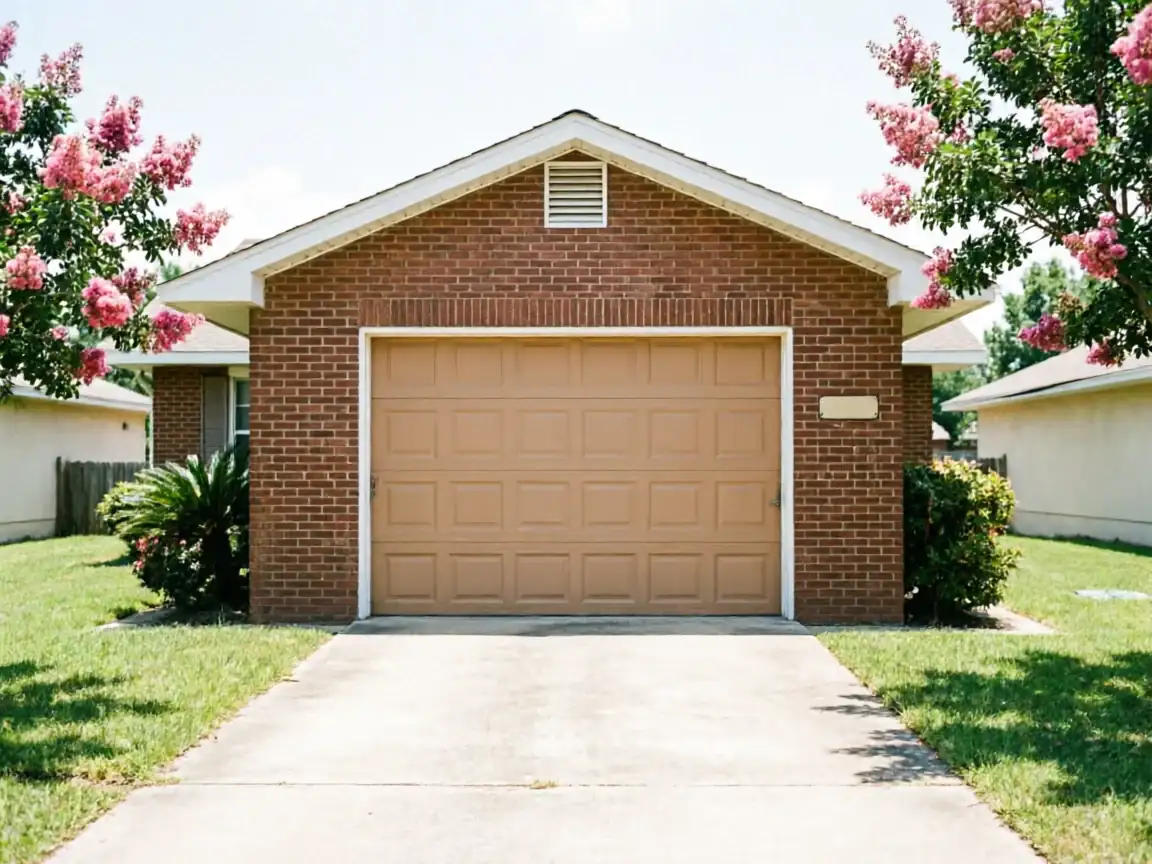
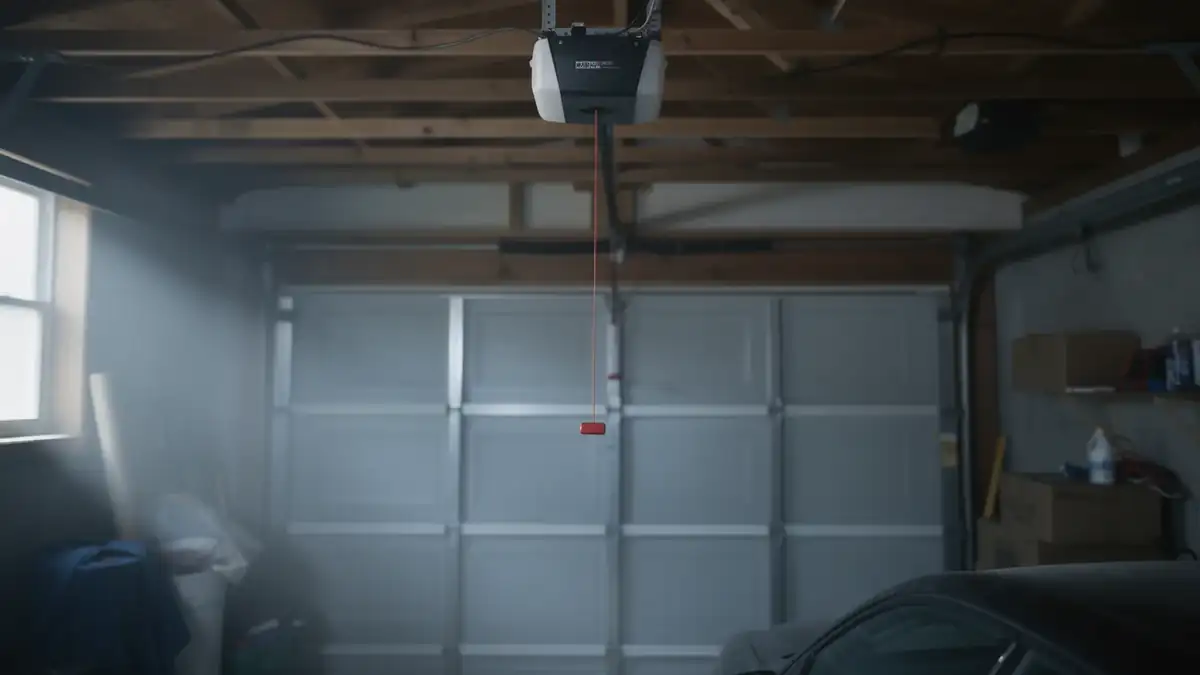
Most of the houses in this service area went up between 1956 and 1981, with the typical build year sitting around 1972, and across the five neighborhoods that make up most of the housing stock here, that 1960s-and-70s era is the rule, not the exception. That matters because this area sits in a cold-moderate climate band, and a lot of the openers still bolted to the ceiling in those garages predate battery backup as a standard feature. When a winter storm takes the power out, a door on one of those units just sits wherever it stopped. No chain drive, no release, nothing moving until the power comes back or someone pulls the manual cord.
Cold also thickens the grease on the opener's drive gear and rail, which is why a unit that ran quiet in July can start grinding or skipping a tooth in January. On the door side, cold-stiffened steel torsion springs lose a little lift, so the opener motor works harder to do the same job it did in warmer months. None of this is dramatic on its own, but on hardware built when Nixon was in office, small extra strain adds up faster than it would on something installed last year.
Checking It Yourself
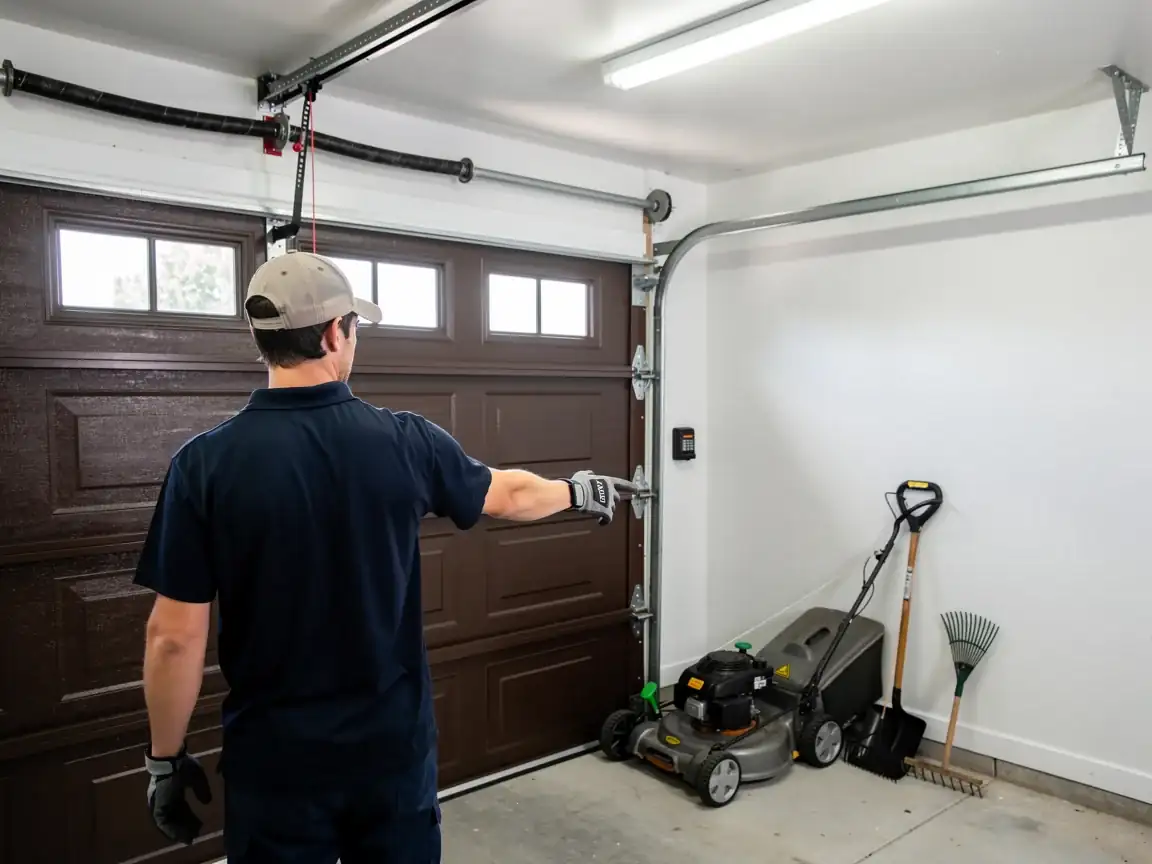
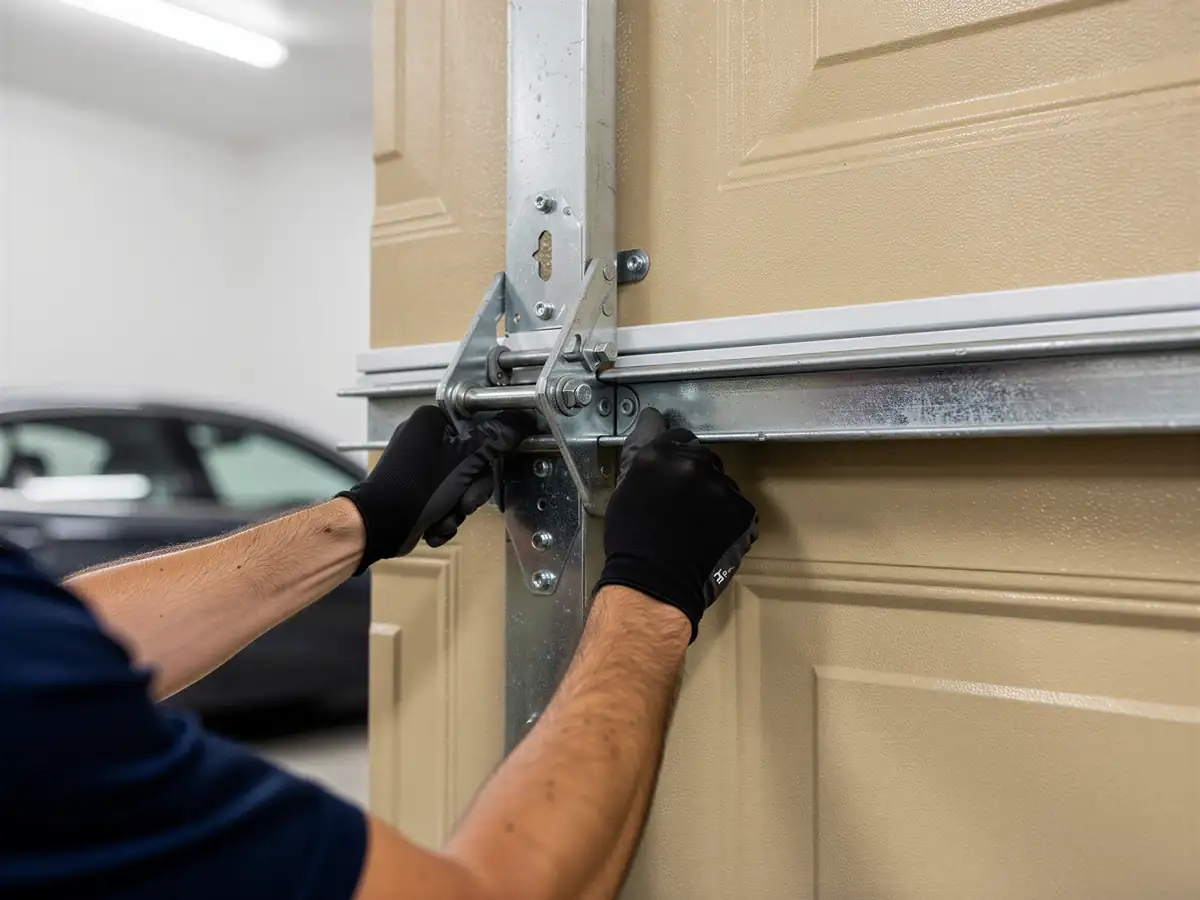
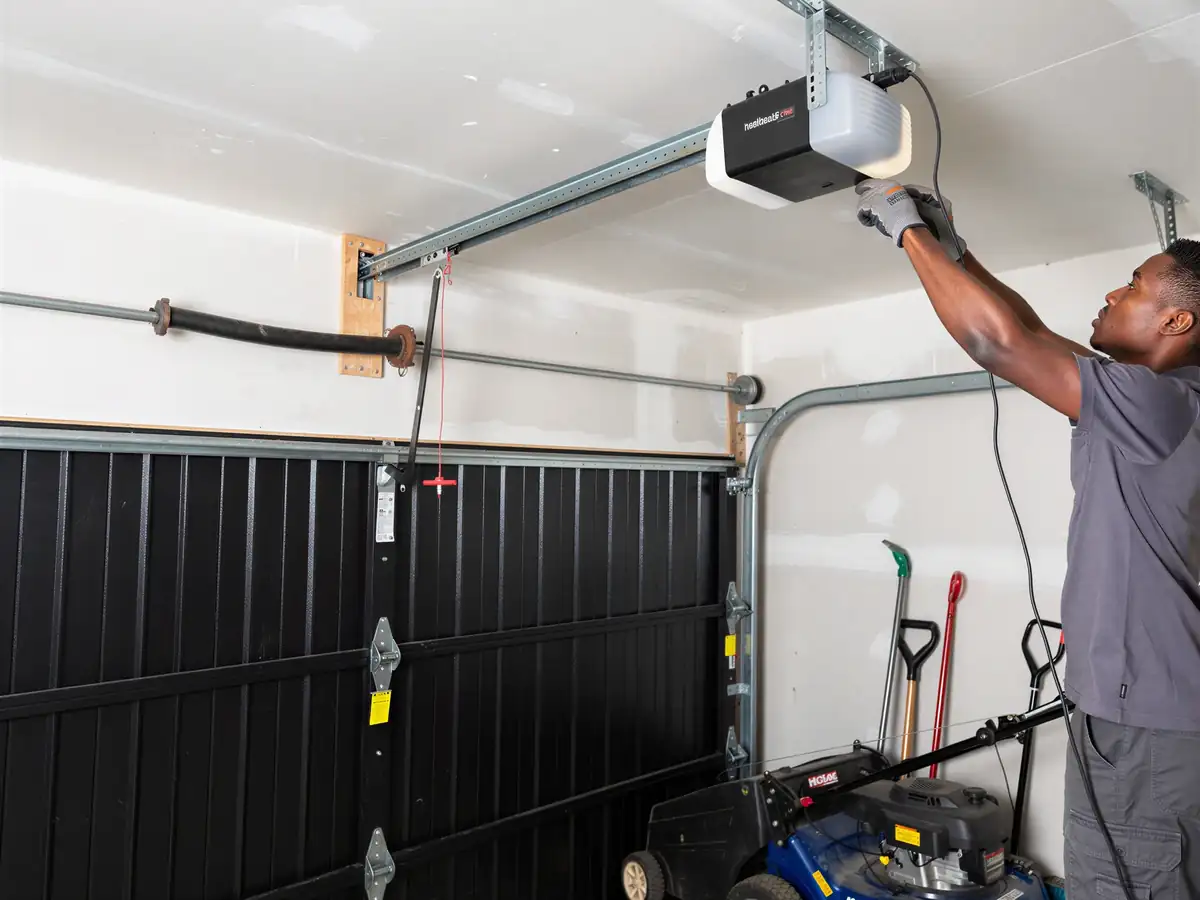
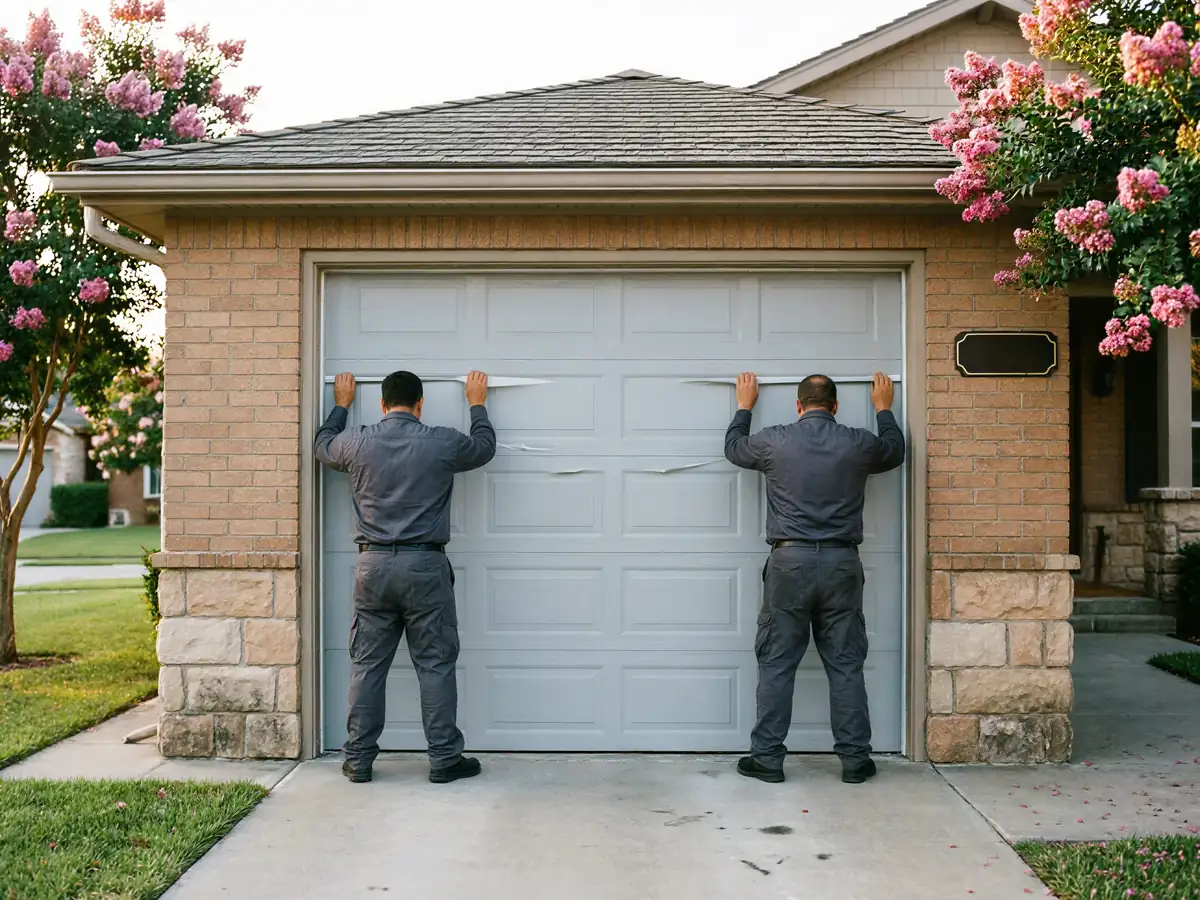
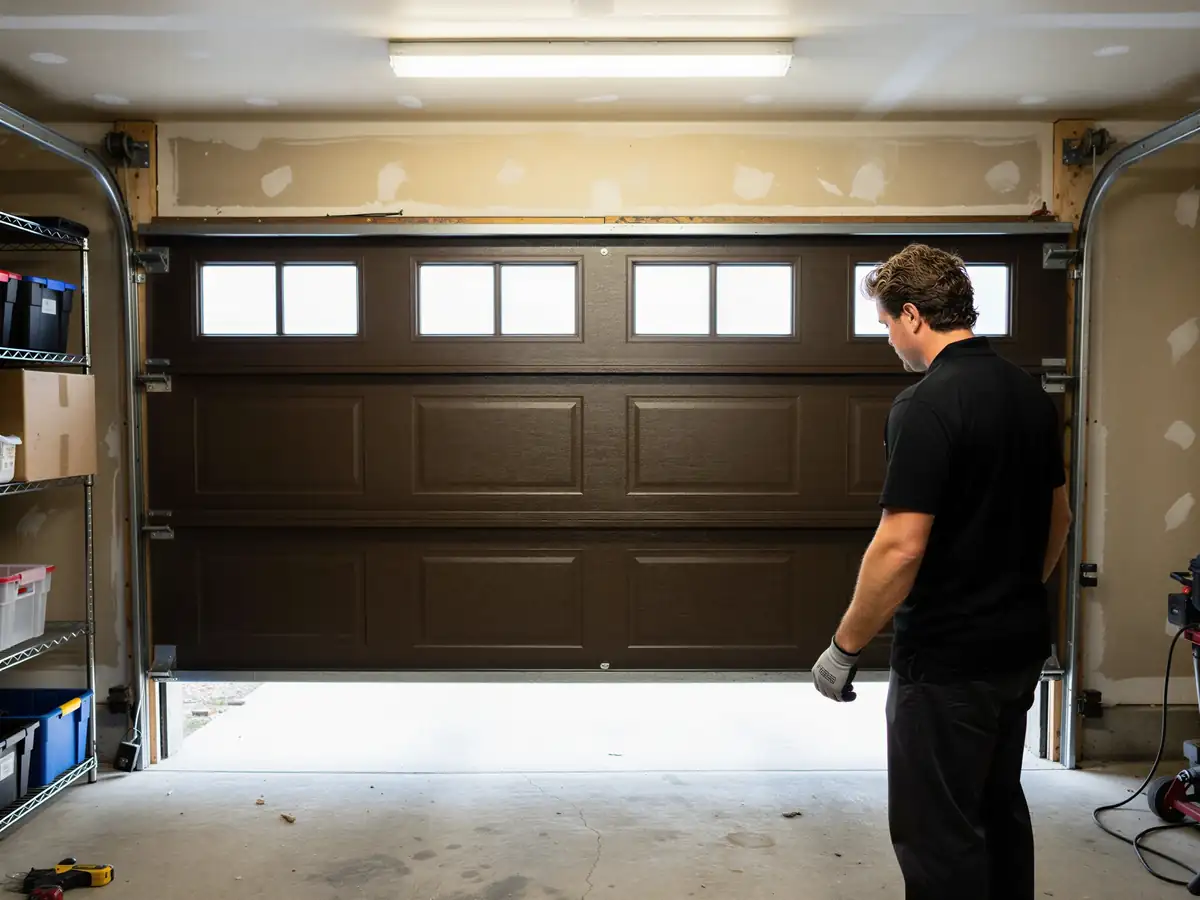
Start with the manual release, the red cord hanging from the trolley. Pull it with the door down, then try to lift the door by hand. It should move with one hand and hold its position halfway up. If it drops or feels heavy, that's a spring problem, not an opener problem, and no amount of opener work fixes it.
If you've got a newer opener with a battery backup, test it: unplug the unit and see if the door still runs on battery power alone. A lot of the opener replacements going into these 1960s and 70s houses now include backup as standard, but plenty of original installs and older replacements don't, and you won't know which you have until the power actually drops.
Check the photo-eye sensors at the bottom of the tracks, a few inches off the floor. Cold doesn't usually knock these out of alignment, but seasonal ground shift in an older slab can, and a blinking opener light is almost always this, not the motor. Last, listen for a grinding or skipping sound on the rail. That's the grease cycle doing what grease does in winter, and it's worth a once-a-year relube rather than a service call.
When to Call Someone
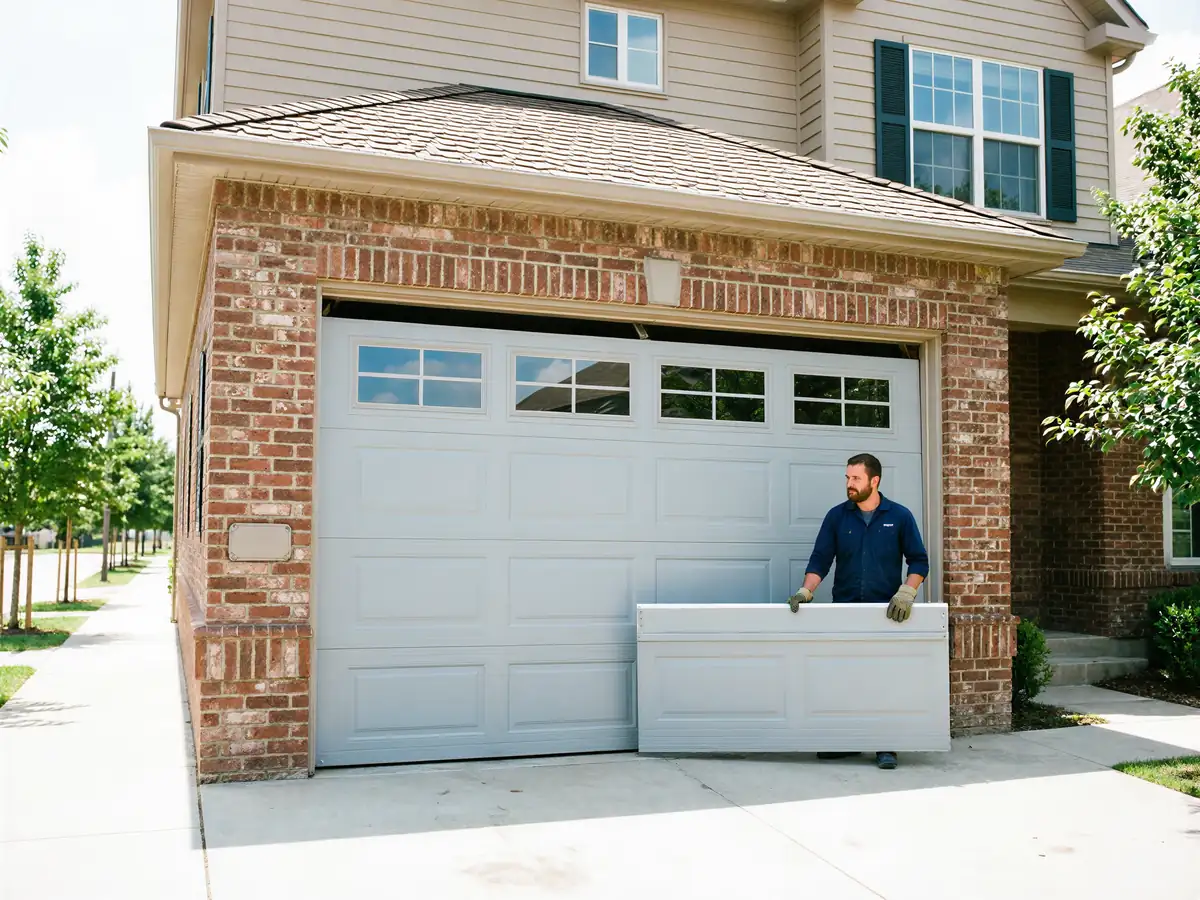
If the door won't lift by hand with the release pulled, stop and call
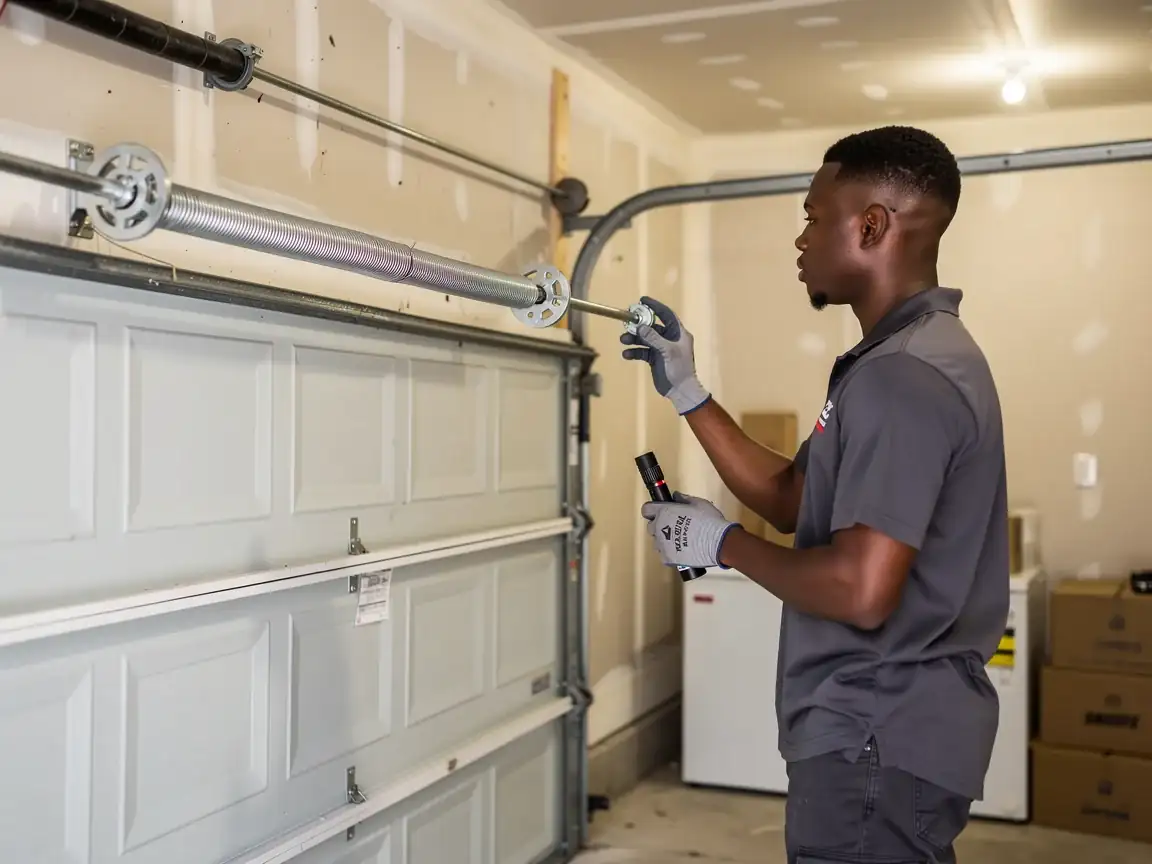
That's spring tension, and a torsion spring under load is not a DIY fix regardless of how the opener is behaving. If the opener runs but the door doesn't move at all, or only moves a few inches and reverses, that's usually the opener's travel limits or a worn gear, and on original units from this era, that gear kit may be long out of production.
For the roughly 1,113 owner-occupied houses across this area
Most sitting on that 1956-to-1981 build range, we end up replacing more openers outright than repairing them, simply because parts for a unit that age aren't stocked anywhere nearby. That's a call-first situation, not a troubleshoot-first one.
- 1,113 owner-occupied
We run jobs out to Waukomis, Kremlin, Garber, Covington, and Pond Creek as well as in town
So if you're closer to one of those than to the center of Enid, that's still inside the area we drive.
The Problem
Here's the honest limitation: a lot of the openers in houses built in this 1960s-70s window are chain-drive units from manufacturers that don't make replacement gear kits or circuit boards for them anymore. We can sometimes source a used board, but it's not a same-day thing, and we won't quote you a repair timeline we can't back up. On those jobs, replacing the whole opener with a current unit, one with battery backup built in, usually costs less in labor than chasing parts for the old one and gets you power-cut protection you didn't have before.
With median household income in this area at $63,869, we know a full opener swap isn't always the easy call, so we'll tell you straight when a $40 gear kit will hold for another few winters versus when you're pouring money into a unit that's going to need the next part in eighteen months anyway.