What the Weather Here Does to It
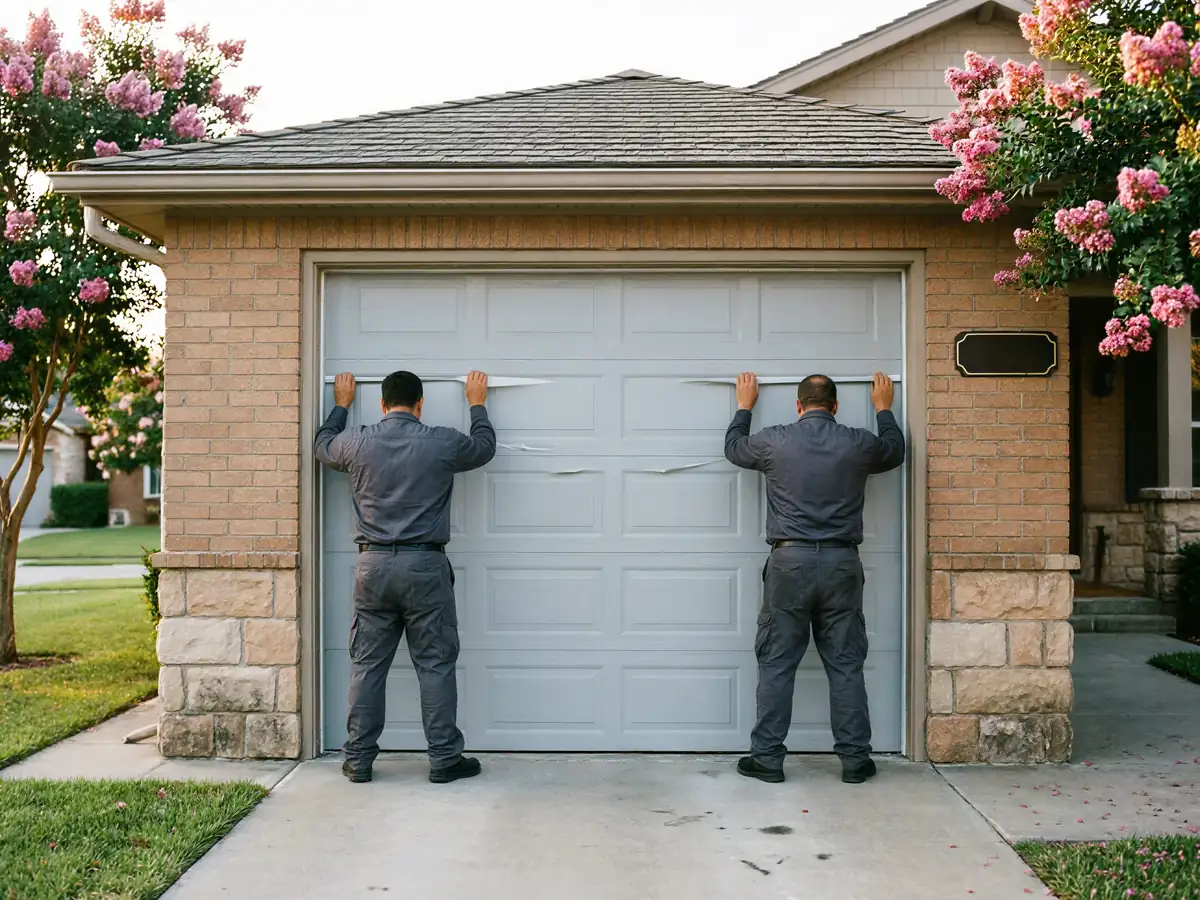
Enid sits in a cold-moderate climate band, which means the freeze-thaw swings do more damage to a garage door than any single hard freeze. Steel panels contract overnight and expand again by afternoon, and that cycle works on the roller tracks and the weatherstrip at the bottom panel until both start to pull loose. Lubricant that was fine in August turns stiff by December, which is why openers start groaning right around the first cold snap.
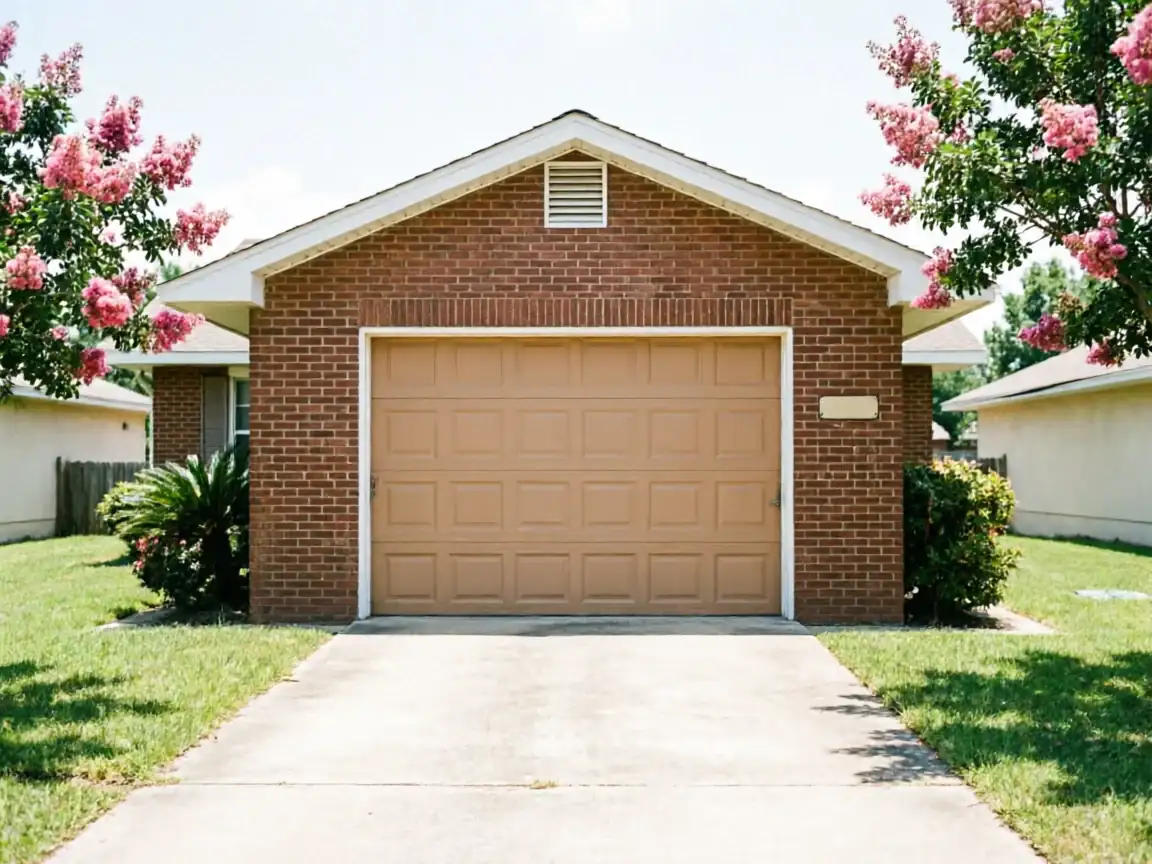
Houses here were mostly built between 1956 and 1981, with the bulk of that stock going up in the 1960s and 70s across the five main areas of town. A lot of those original garage doors are single-layer steel with no insulation, which means the cold transfers straight through to the garage and whatever room shares a wall with it. On a service call, we're checking whether the door itself is losing the fight with the weather, or whether it's just the hardware - springs, rollers, track alignment - that's worn from decades of that same cycle. Those are two different jobs with two different price tags, and it matters which one you actually have before anyone touches a wrench.
Checking It Yourself
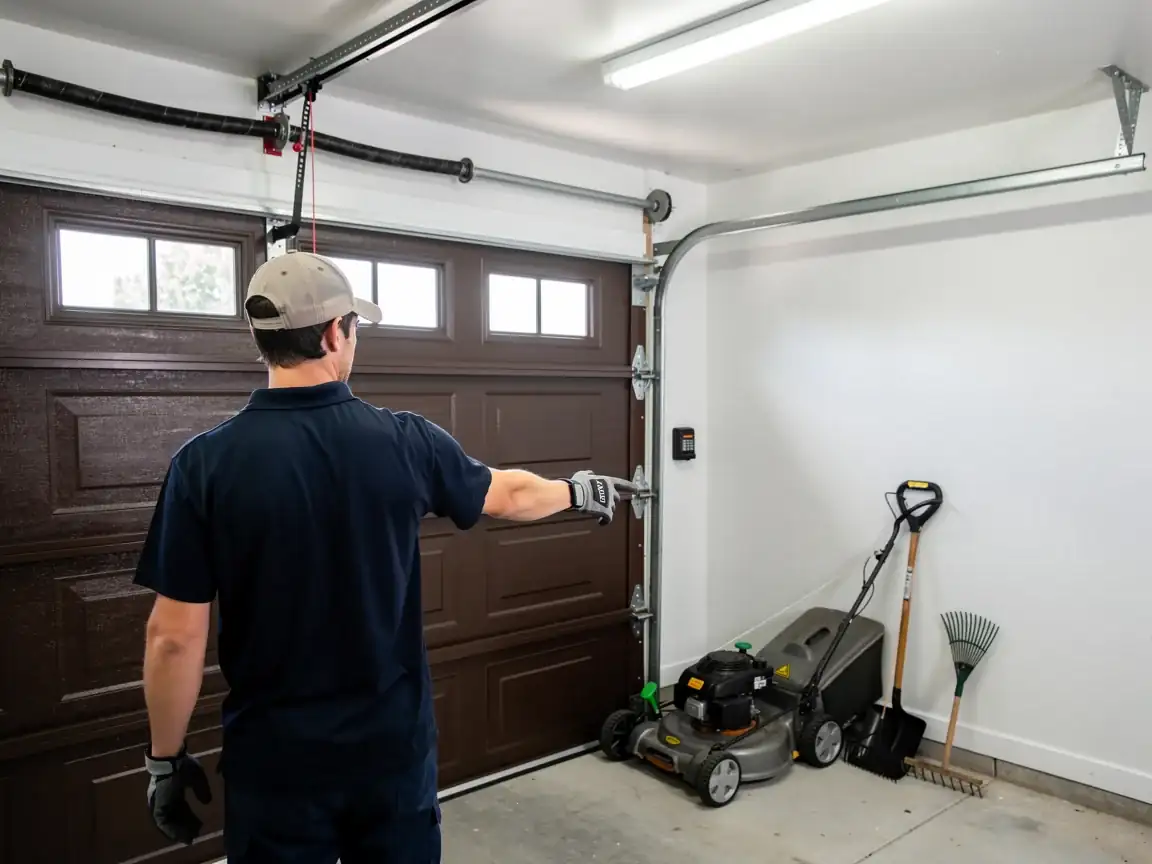
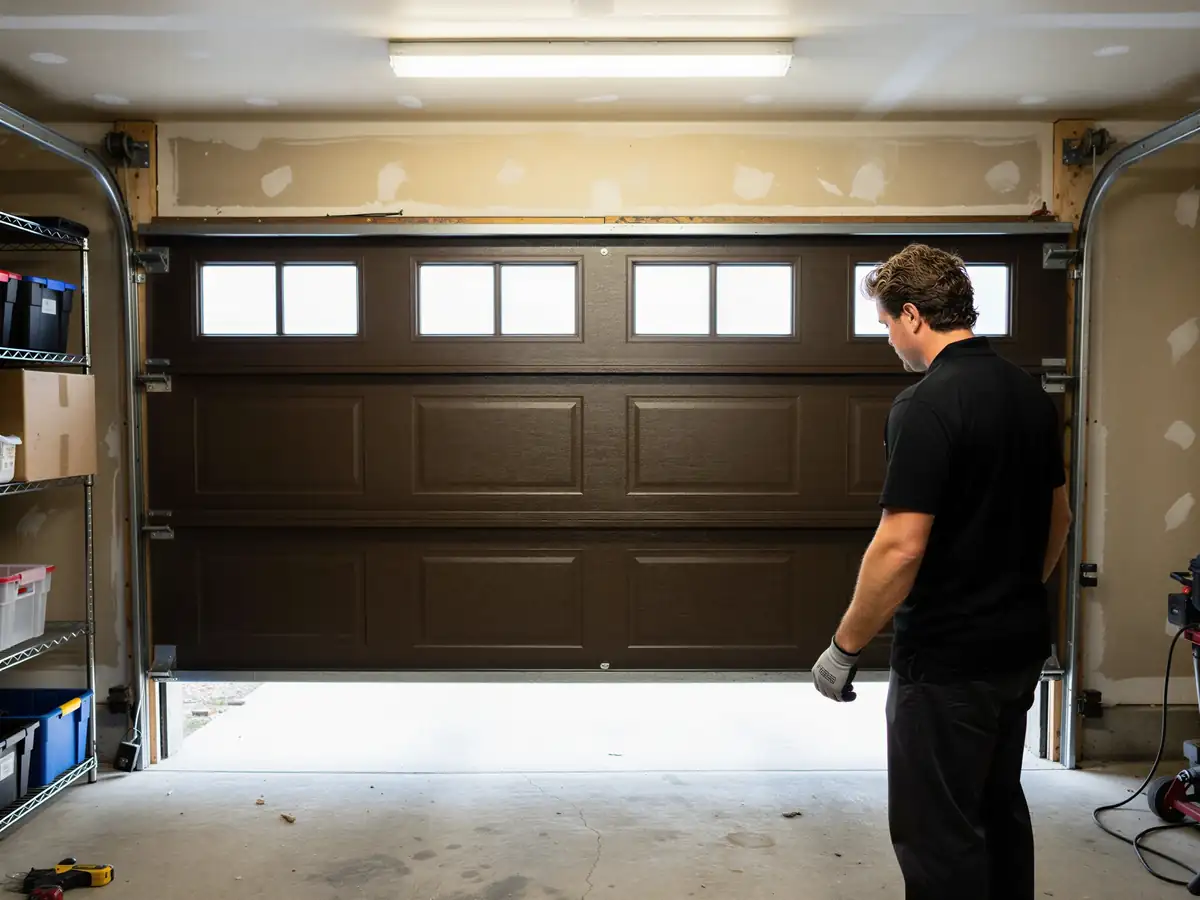
Before you call anyone, there are a few things worth looking at, especially in a house from the 1960s or 70s where the original torsion hardware may still be in place. Pull the release handle with the door down and try to lift the door by hand. It should move with one hand and stay roughly where you put it. If it drops like a stone or fights you hard, the spring tension is off and that's not a DIY fix.
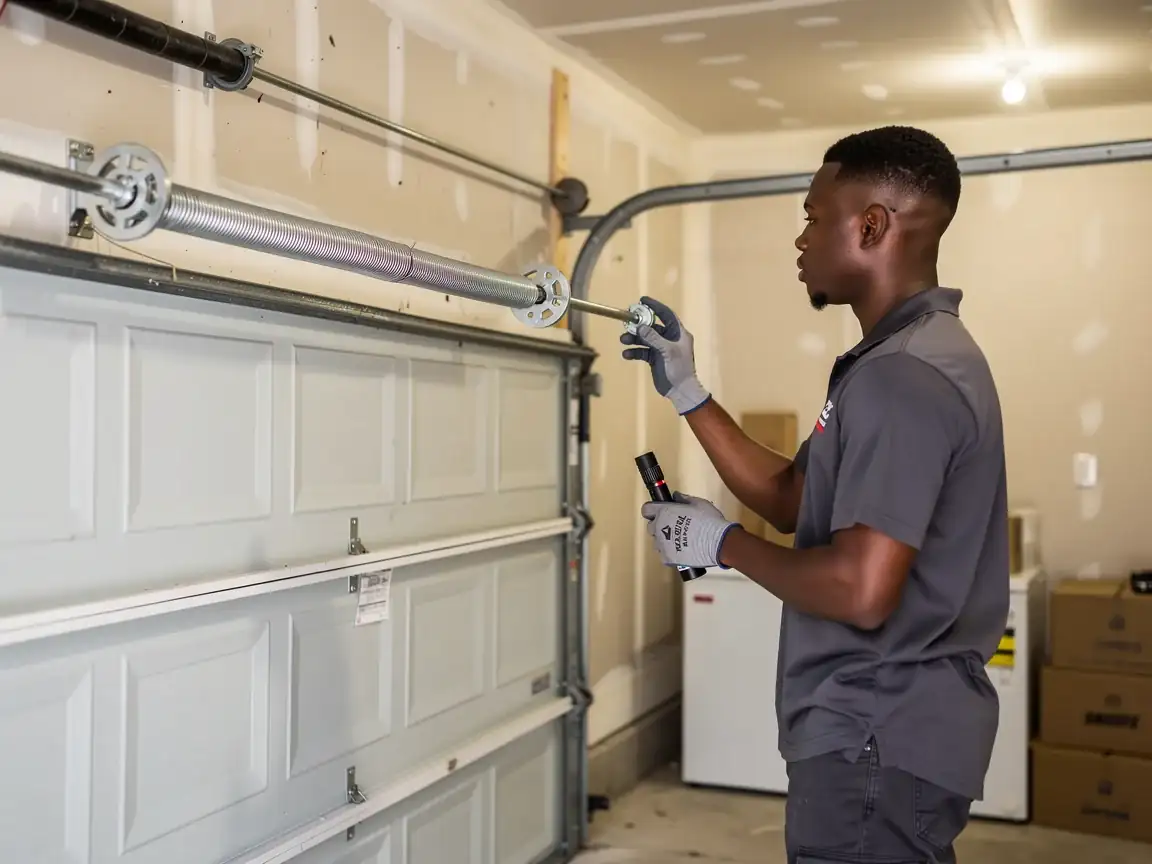
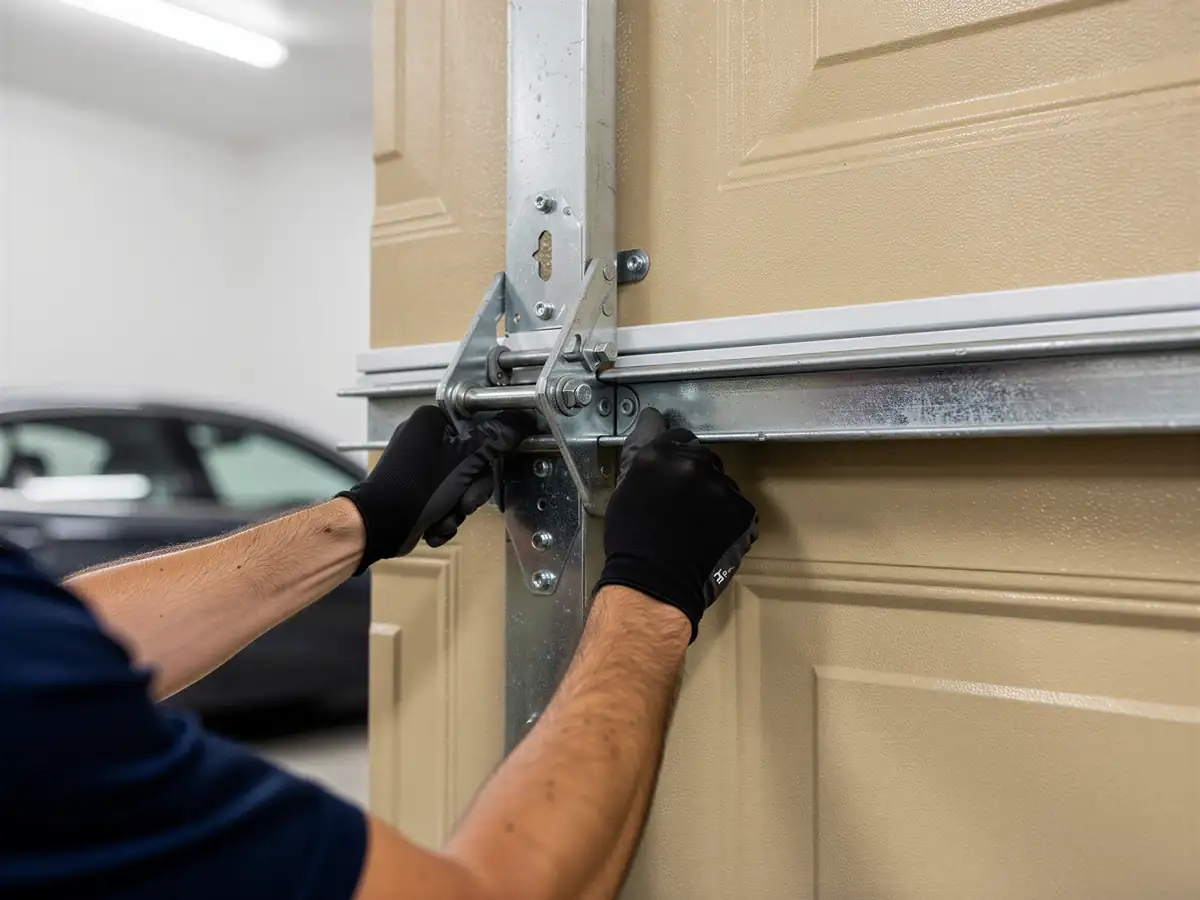
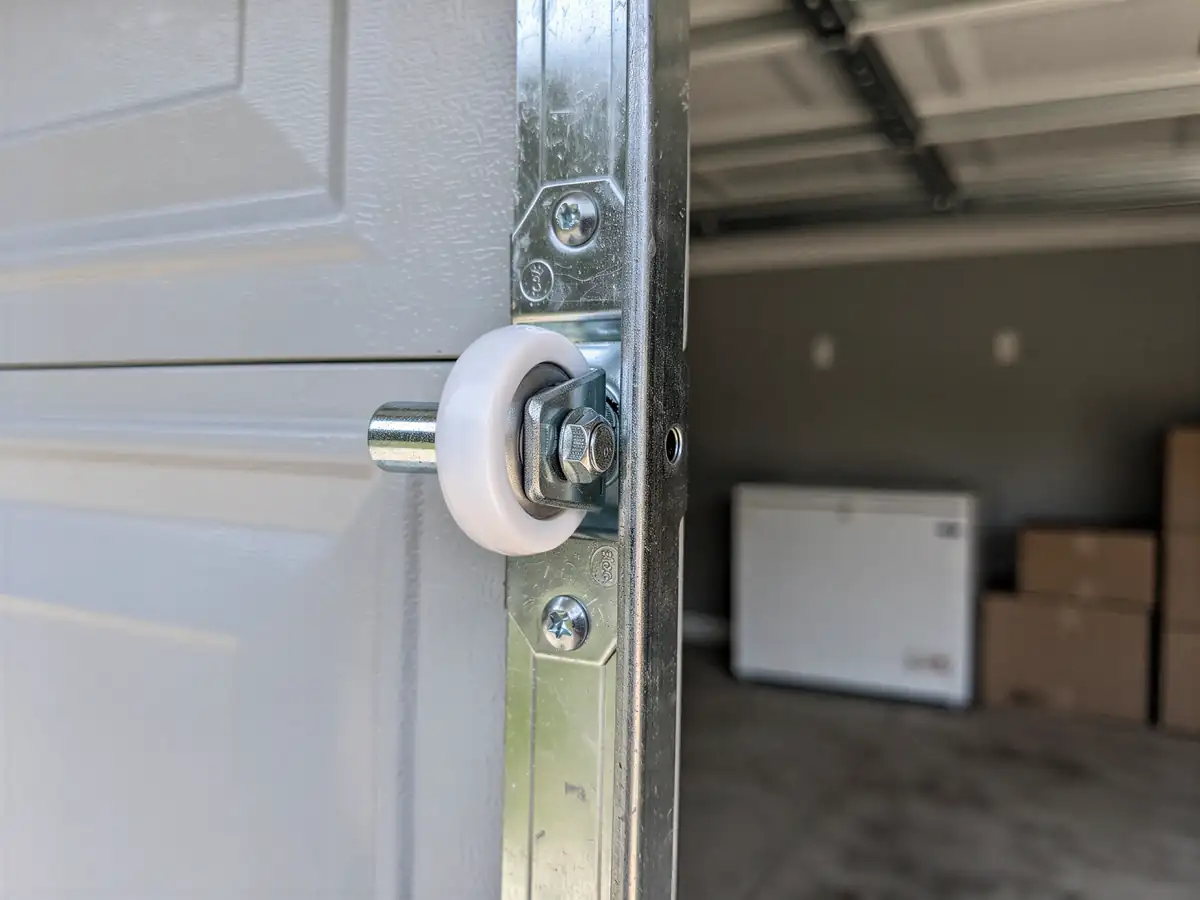
Look at the bottom bracket cables on both sides - fraying there, especially near the drum, means the cable is close to letting go. Check the track for daylight gaps where it bolts to the jamb; on older houses the wood jamb itself has sometimes shifted over sixty-plus years and the track bracket has worked loose with it. Listen to the opener motor. A grinding or a hesitation before it engages usually means the gear inside is wearing, not that the whole opener needs replacing.
What you shouldn't do is touch anything under spring tension - the torsion spring on a cold morning after decades of use is exactly the kind of thing that puts people in the hospital. That part of the check is ours, not yours.
When to Call Someone
Call if the door won't lift evenly on both sides
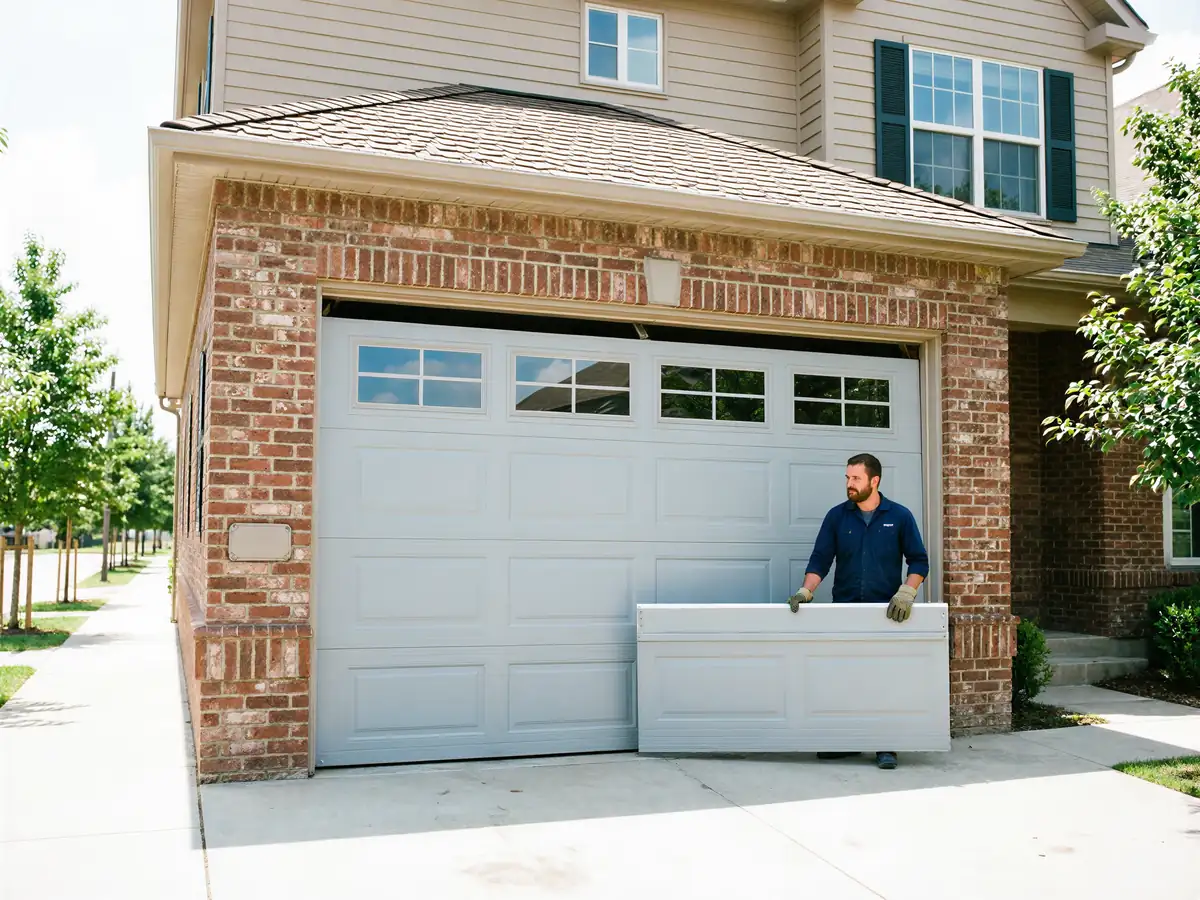
That's almost always a cable or spring issue, and running the opener against it will strip the gear or snap something worse. Call if you hear a bang followed by the door going dead weight; that's very likely a broken torsion spring, and on a door built to 1970s hardware standards, the replacement spring needs to match tension to the door's actual weight, not a generic size.
Call if the opener runs but the door barely moves, especially in a house with the original steel sectional door
At that age the panels themselves can be sagging slightly, and the opener is just masking a hardware problem that's gotten worse over years.
One honest limit here
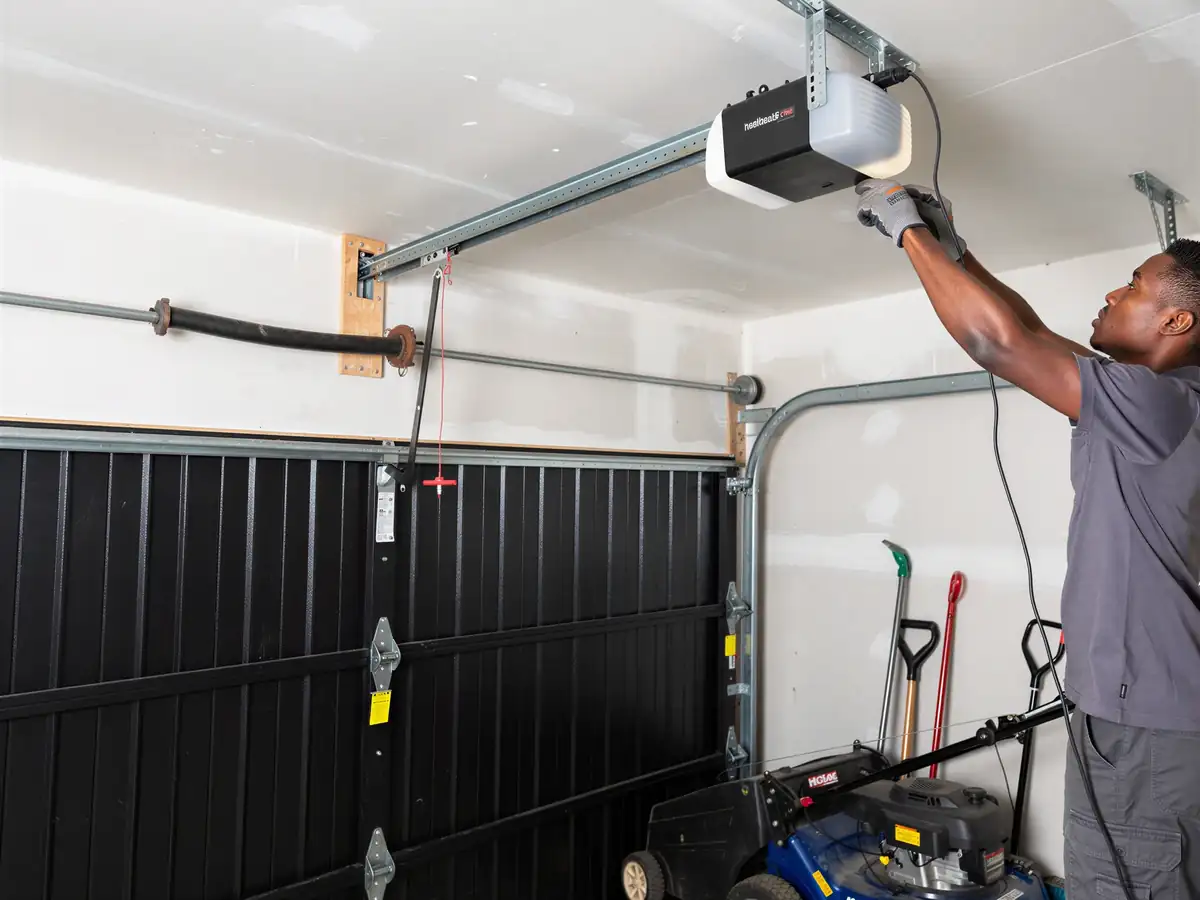
If your opener logic board has failed on an opener old enough that the manufacturer no longer makes the control board, we can tell you that on the call, but we can't always get that exact part fast. Sometimes replacing the opener outright is the faster and cheaper path than waiting on a board nobody stocks anymore.
The Problem
The actual problem on most calls in this area isn't the door - it's that original 1960s and 70s hardware was never designed to run forever, and nobody in a household of this income range (the median here runs around $63,869) wants to replace a whole door system before it's necessary. So the call is about figuring out which specific part failed, whether it's still available, and whether fixing that one part gets you another decade or just buys six months before the next part goes.
Across the service area there are roughly 1,235 households and about 1,113 owner-occupied houses, a good share of them original construction from that same era. That means a lot of the hardware we see on calls is original or close to it - sized differently than what's sold today, mounted differently too. Matching new parts to old hardware is most of the actual labor on a repair call, more than the wrench time itself.