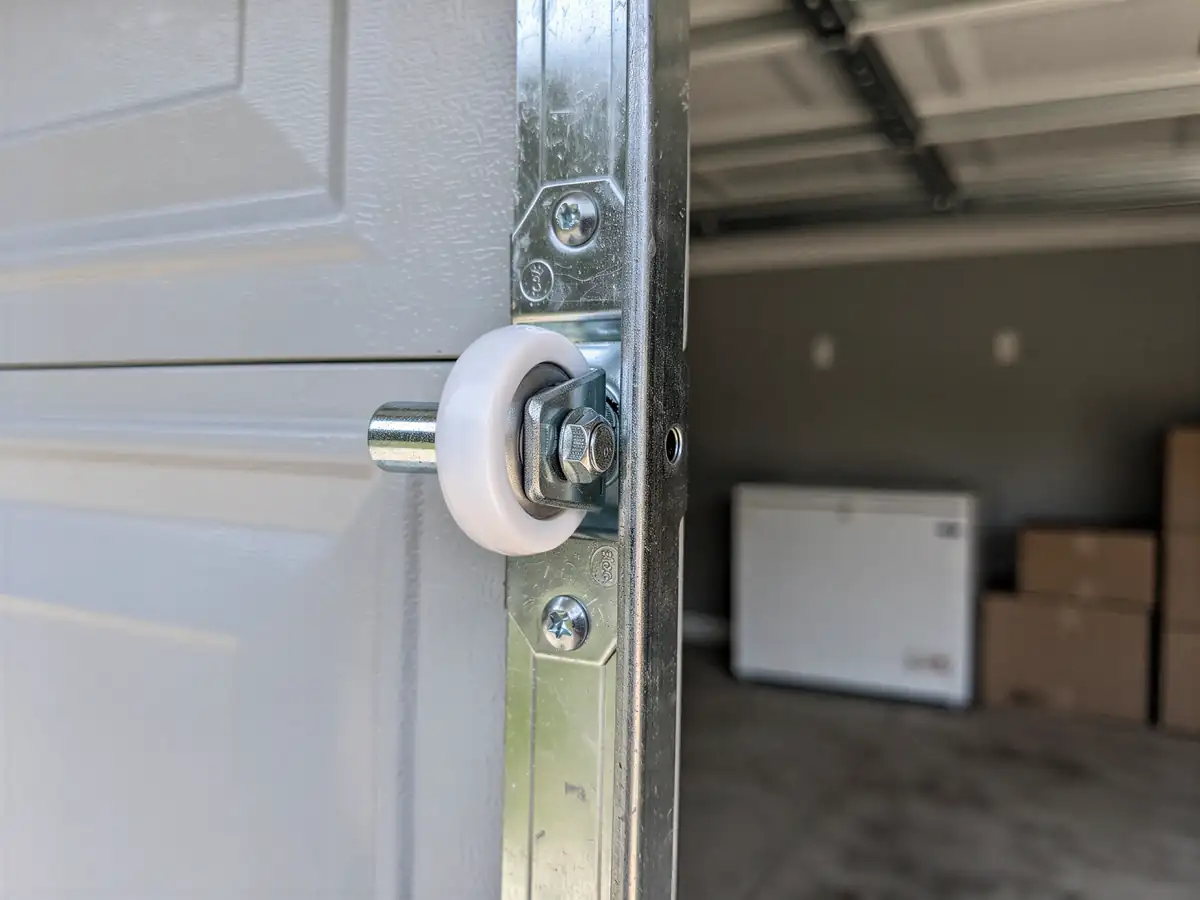
Why This Fails Locally
Enid's housing stock mostly went up between 1956 and 1981, with a median build year around 1972, and that matters more than most homeowners realize when it comes to rollers. A door built in that window usually still runs on the steel rollers and tracks it shipped with, or a direct swap installed decades ago using the same gauge hardware. Steel rollers were standard then, and steel doesn't flex - it grinds against the track edges every time the door moves, year after year.
Add the climate band here, which sits on the cold-moderate line, and you get a second problem stacked on the first. Grease in old roller bearings stiffens in a hard freeze, and the stem that holds the roller to the bracket can corrode slightly where condensation collects on cold mornings and burns off by afternoon. That expansion-and-contraction cycle, repeated for 50-plus winters on a lot of these doors, is exactly what loosens roller stems and wears the groove where the roller meets the track. This isn't a defect in any one door - it's what happens to original hardware from that era in this weather, consistently, across the neighborhoods built in that same stretch.
How It Shows Up
The most common first sign is noise - a grinding or popping sound as the door travels, usually worse at the top or bottom of the run where the track curves. That curve is where a worn roller fights the track hardest, and it's often the first place a steel roller from the 1960s-70s era starts to flat-spot.
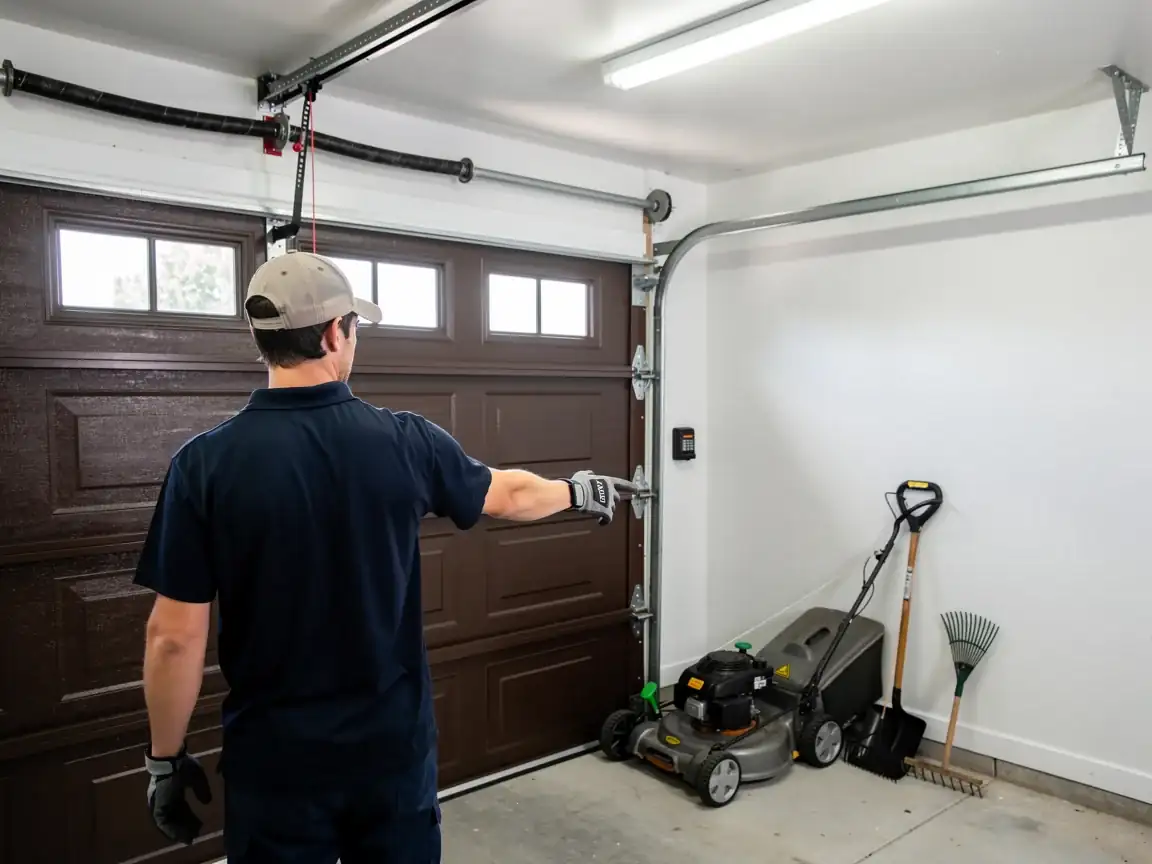
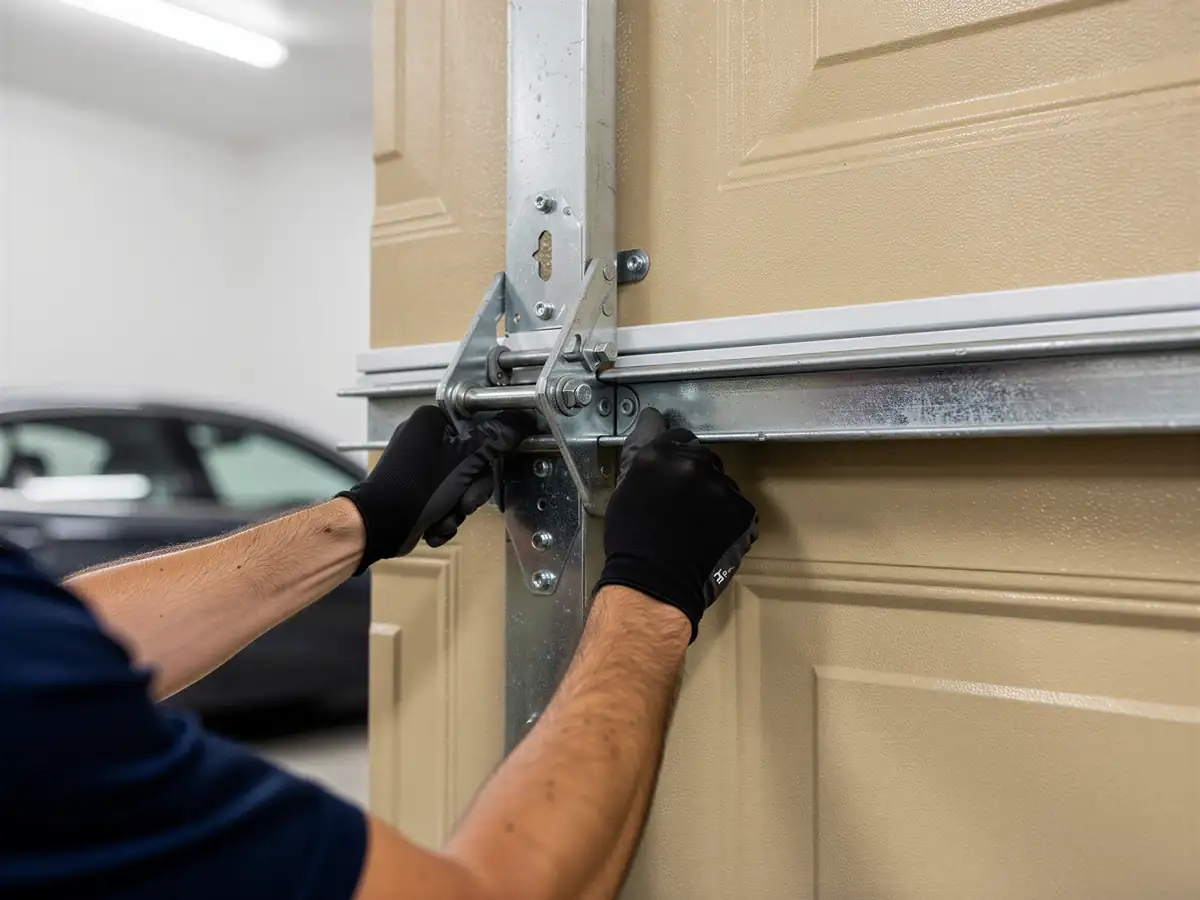
Next comes binding. The door hesitates partway up, or the opener strains and reverses before it reaches the top. That's usually not the opener's fault - it's a roller that's stopped turning freely in its bracket and is now dragging instead of rolling. You might also notice the door walking slightly off-center as it closes, rubbing one side of the weatherstrip against the frame.
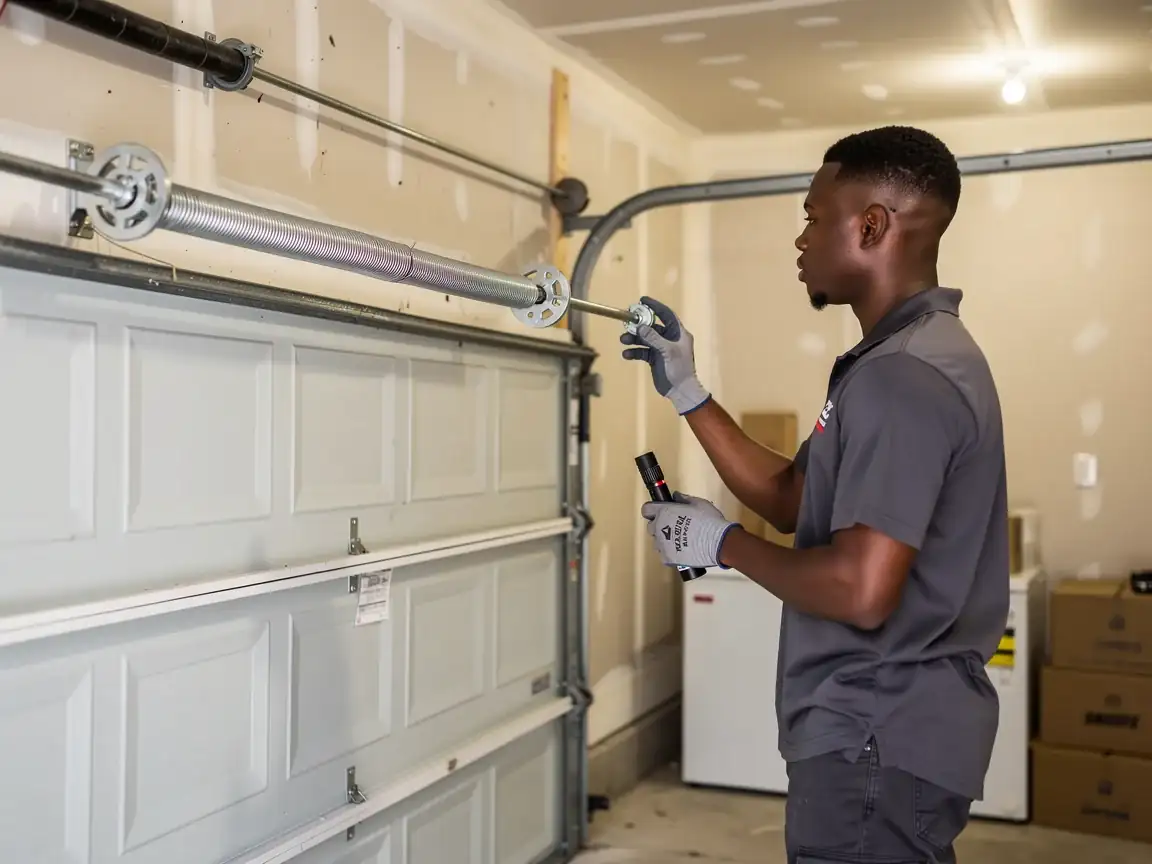
On older one-piece doors still running the original side-mounted hardware common to this build era, roller wear can also loosen the hinge-to-roller connection, which shows up as visible wobble in the panel itself as it moves. None of this means the door is unsafe to use for a day or two, but it does mean the hardware is past the point where oiling the track helps.
The Complications
Roller replacement sounds simple
And sometimes it is - pull the old roller, drop in a new one, done. But on a lot of Enid's older doors, a few things complicate that job. First, tracks installed alongside original 1960s-70s hardware are often bent slightly from decades of a worn roller riding against them unevenly. Putting a new roller into a bent track just wears the new roller the same way, so the track usually needs straightening or replacing at the same time.
Second, original hinges on doors from this era are frequently rusted or sized differently than current stock
Which means a straight parts swap doesn't always work - we have to match or adapt the hinge before the new roller sits right. Third, on doors where more than one or two rollers have failed, it's often a sign the whole set is near the end of its life, not just the ones making noise, since they've all logged the same years in the same cold snaps.
We'll be honest about one limit here
If the track is bent badly enough, or the door panel itself has started to sag from the stress, roller replacement alone won't fix the problem, and we'll tell you that instead of selling a repair that won't hold.
What It Costs
We don't post a flat number for roller replacement because the real cost depends on what we find once the door's open - how many rollers need replacing, whether the track needs straightening, and whether the hinges or roller brackets on your specific door are original equipment or a past repair. A full roller set replacement is a different job than swapping two.
What we can tell you: across the households we see in this area - a mix of owner-occupied homes mostly built in the 1960s and 70s - roller wear is one of the most common calls we get, and it's rarely an emergency repair if you catch the grinding noise early rather than waiting for the roller to fail completely. Catching it early usually keeps the job to roller and bracket work rather than track or panel replacement, which is the more expensive direction this problem heads if it's ignored.