Can You Do This Yourself
Covington is small - about 136 households, which means there's no local garage door shop, no parts counter in town, and no one down the street who does this for a living. That's not a knock on the place, it's just the math of a town this size. It means when a spring lets go or a track bends, you're either driving to Enid for parts or waiting on someone to drive 17 miles out to you.
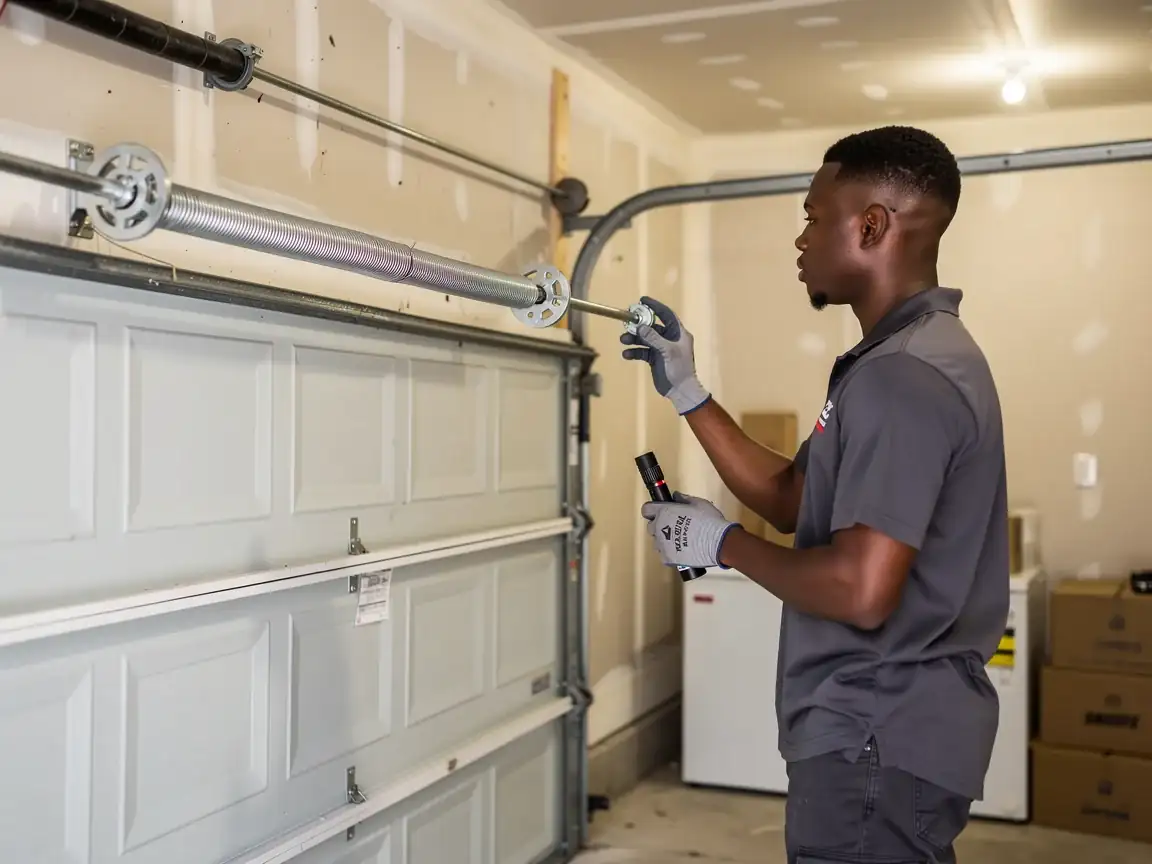
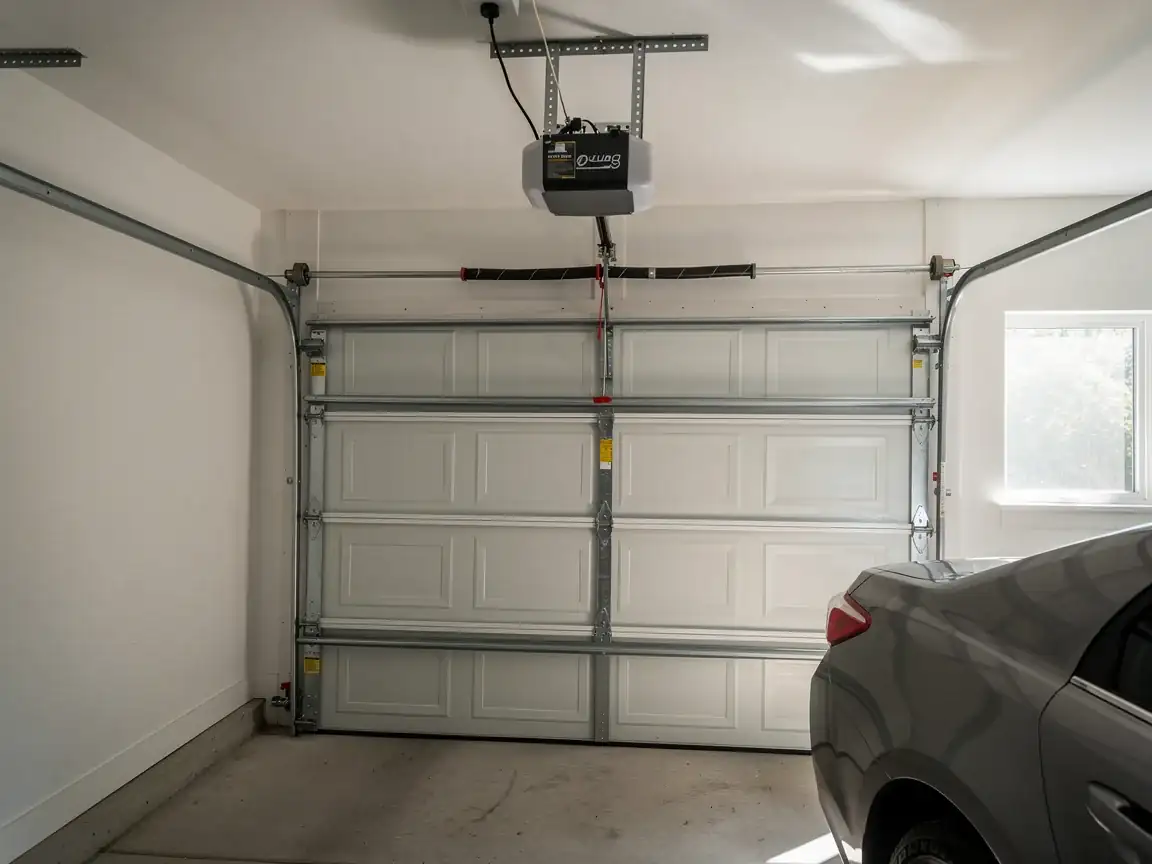
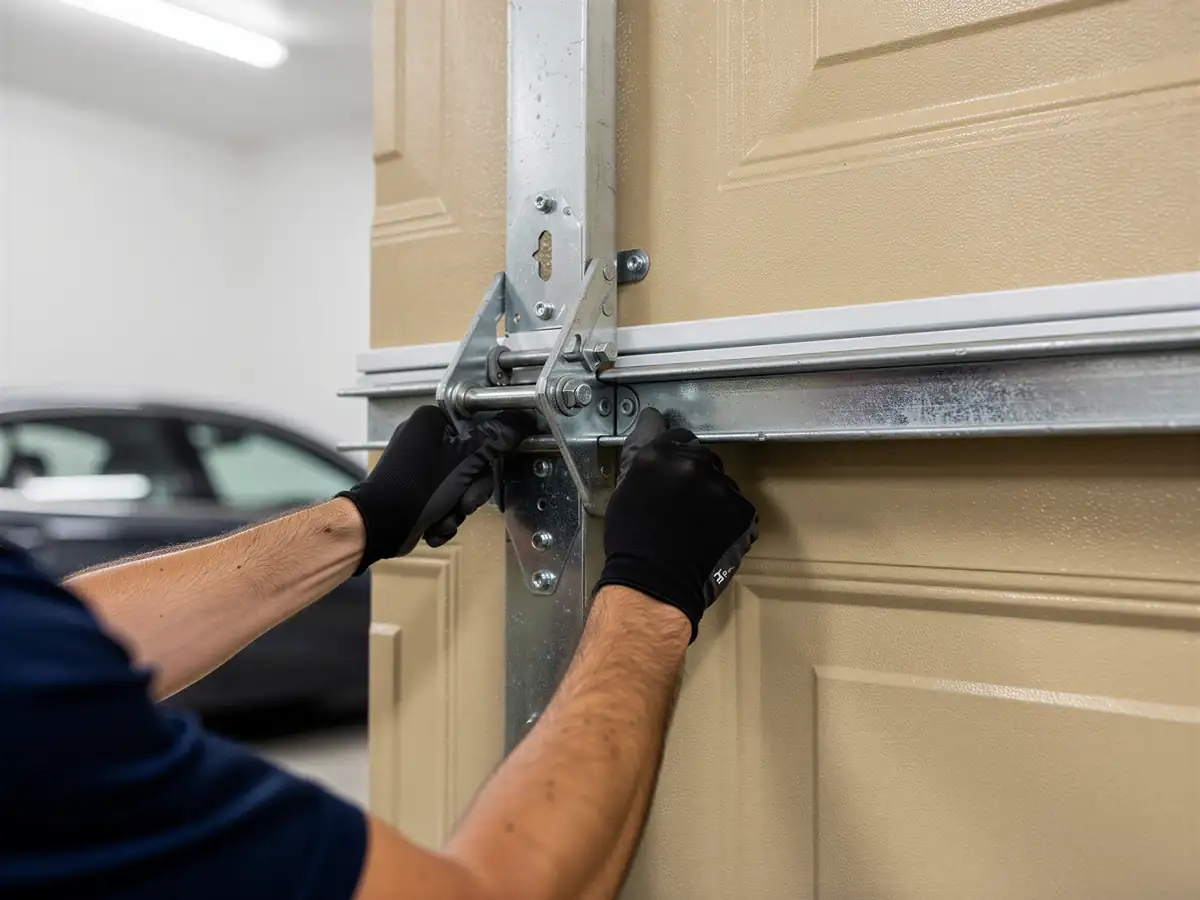
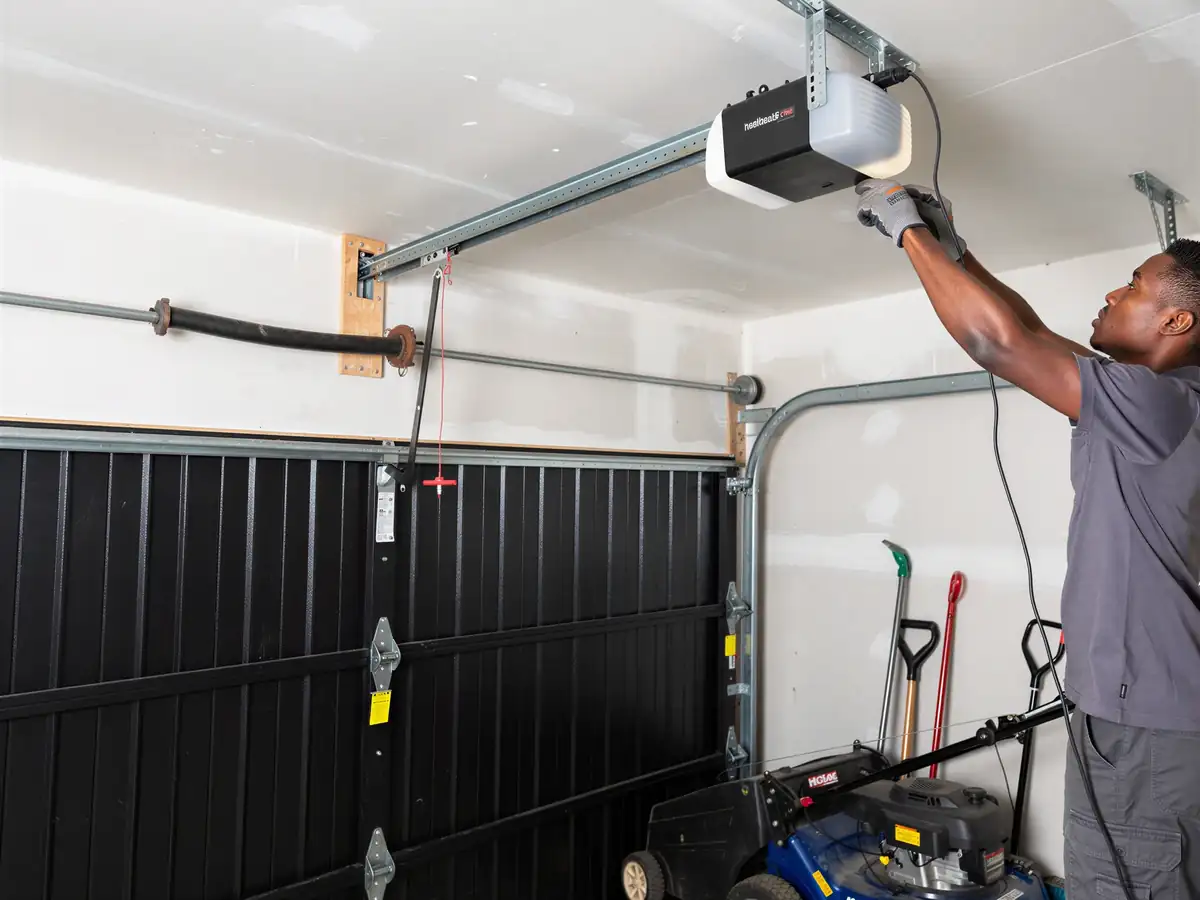
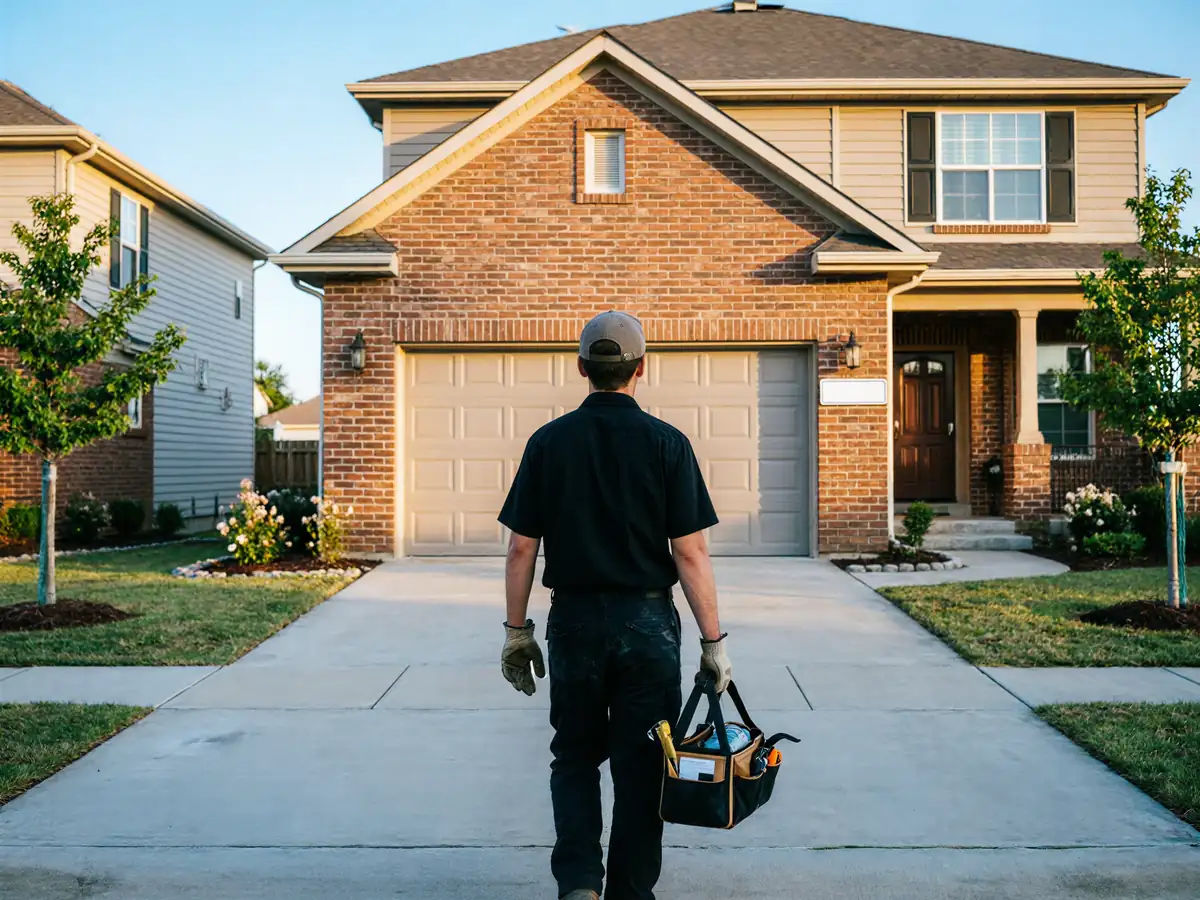
Some things you can handle on your own: a misaligned photo-eye sensor, a track that needs a wipe-down and light lubrication, tightening a loose hinge bolt. What you shouldn't touch is anything involving the torsion spring or the cables under tension - those store enough force to break a hand or worse, and on a house built in the 1950s or 60s, the hardware holding that spring in place has had six decades to rust, fatigue, or get patched by a previous owner. If the door won't move, or it moves and then drops, stop and call someone. That's not us being cautious for the sake of it - it's where DIY actually turns into an ER visit.
How It Shows Up
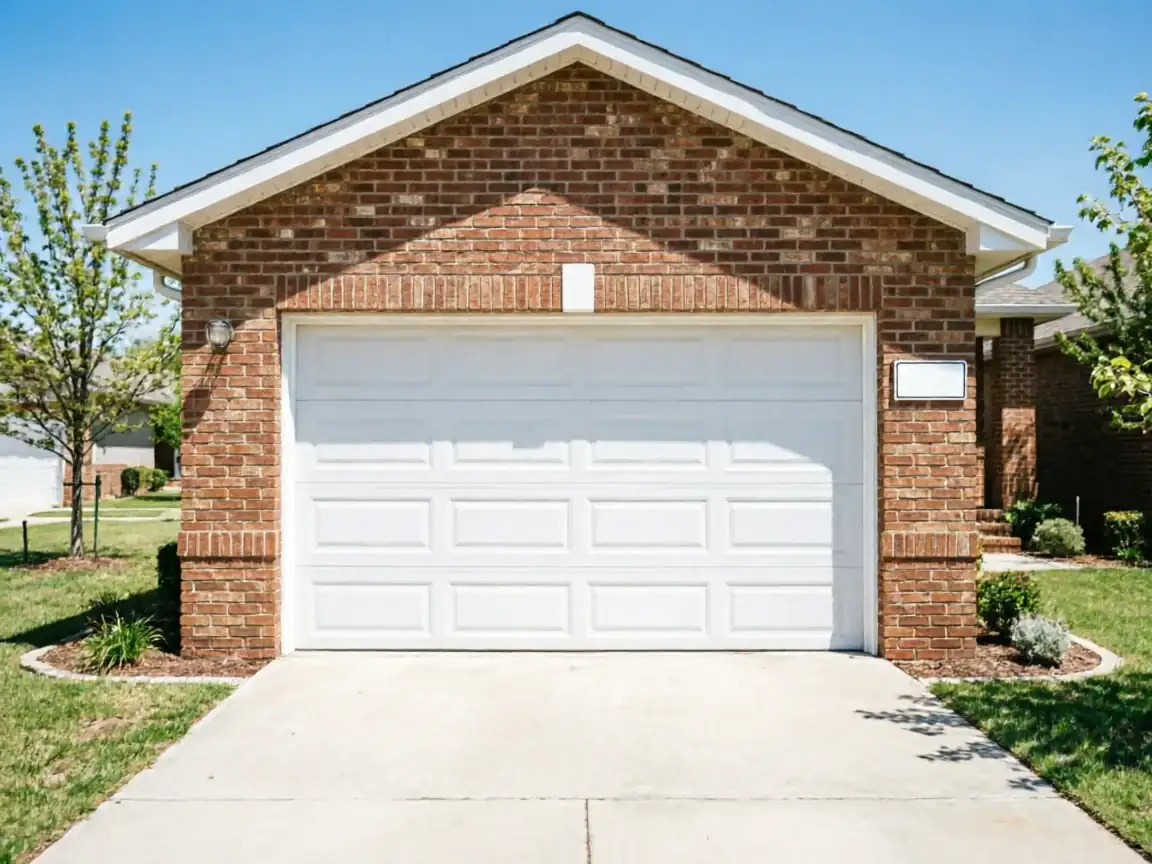
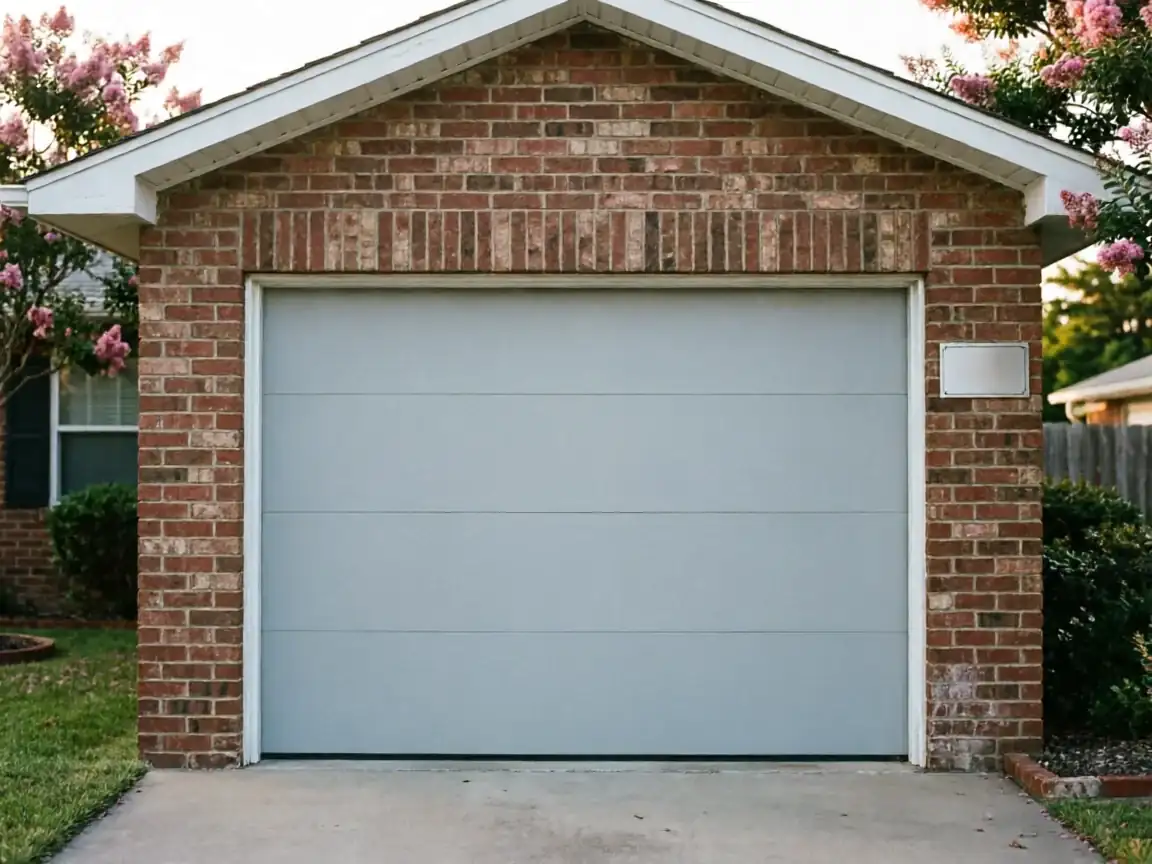
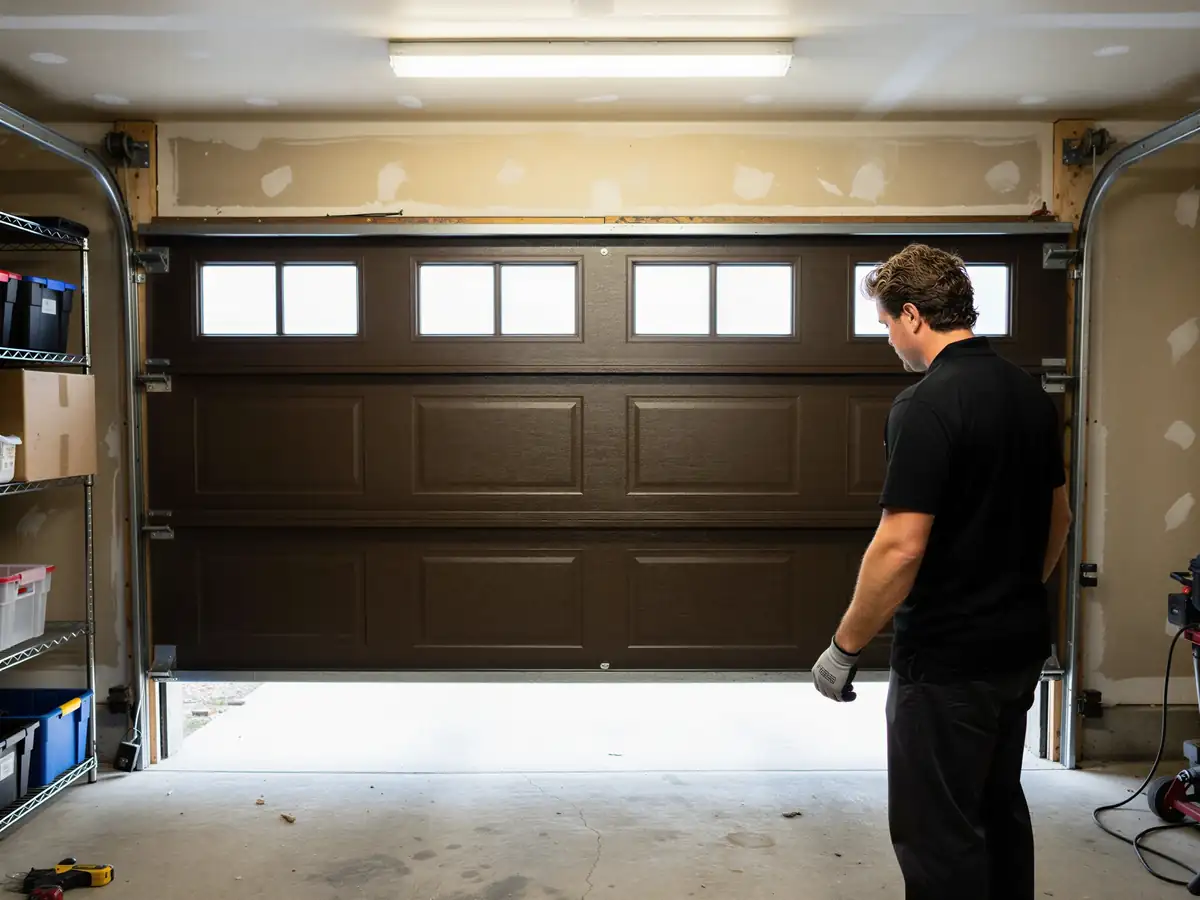
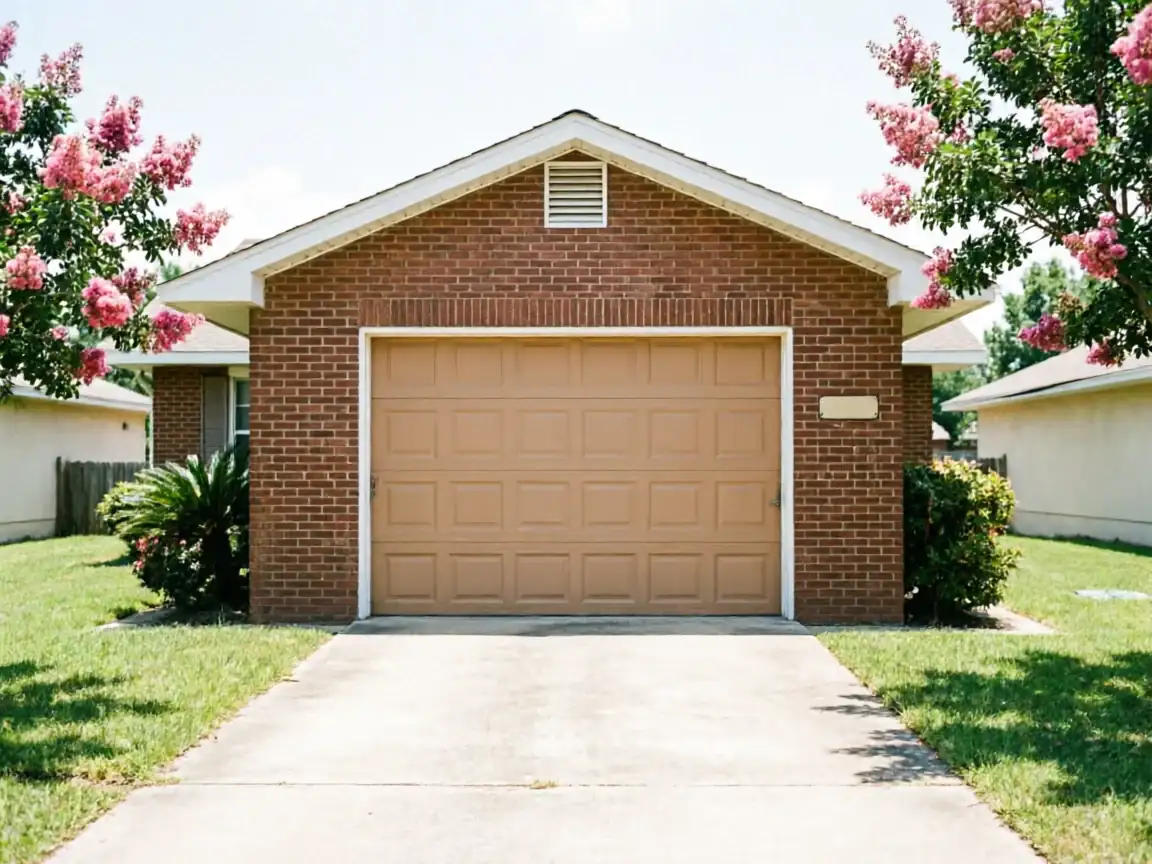
Most houses in this part of the county went up between 1956 and 1981, and Covington itself sits right at the early end of that window. A door that old, if it's never been replaced, is carrying original one-piece or early sectional hardware that nobody manufactures anymore. The failure pattern out here looks different from a newer subdivision: springs that have simply outlived their wind count, tracks bent from decades of settling foundations, and openers bolted onto framing that was never built for an electric unit in the first place.
The cold is the other half of it. This area sits in a moderate-cold climate band, and steel springs lose tension and get brittle faster in a hard winter than people expect. On an older door, that shows up as a spring that snaps on the first cold morning of the year rather than gradually loosening. If your door has gotten noticeably harder to lift by hand once the temperature drops, that's usually the spring telling you it's close to done, not the opener.
Parts We Carry
We stock the parts that actually fail on doors of this era and in this climate
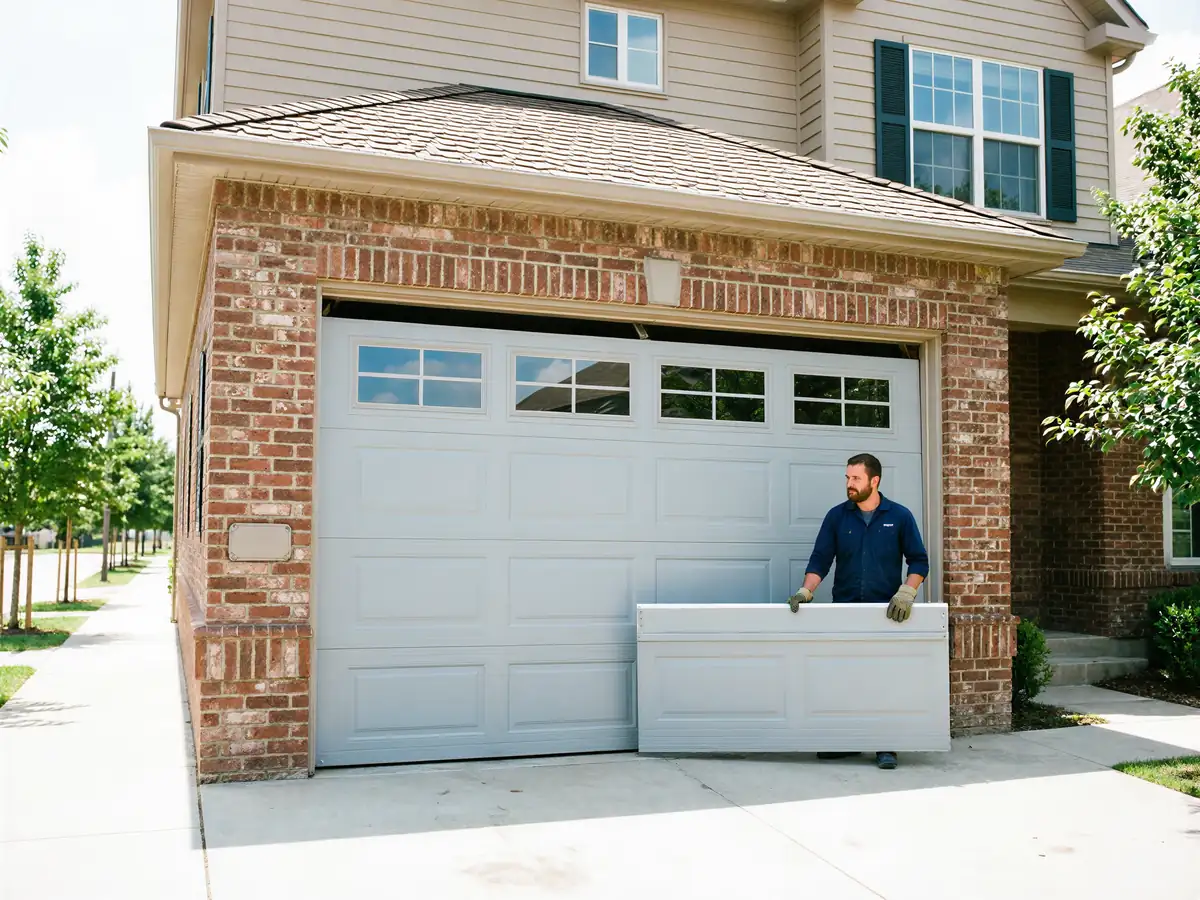
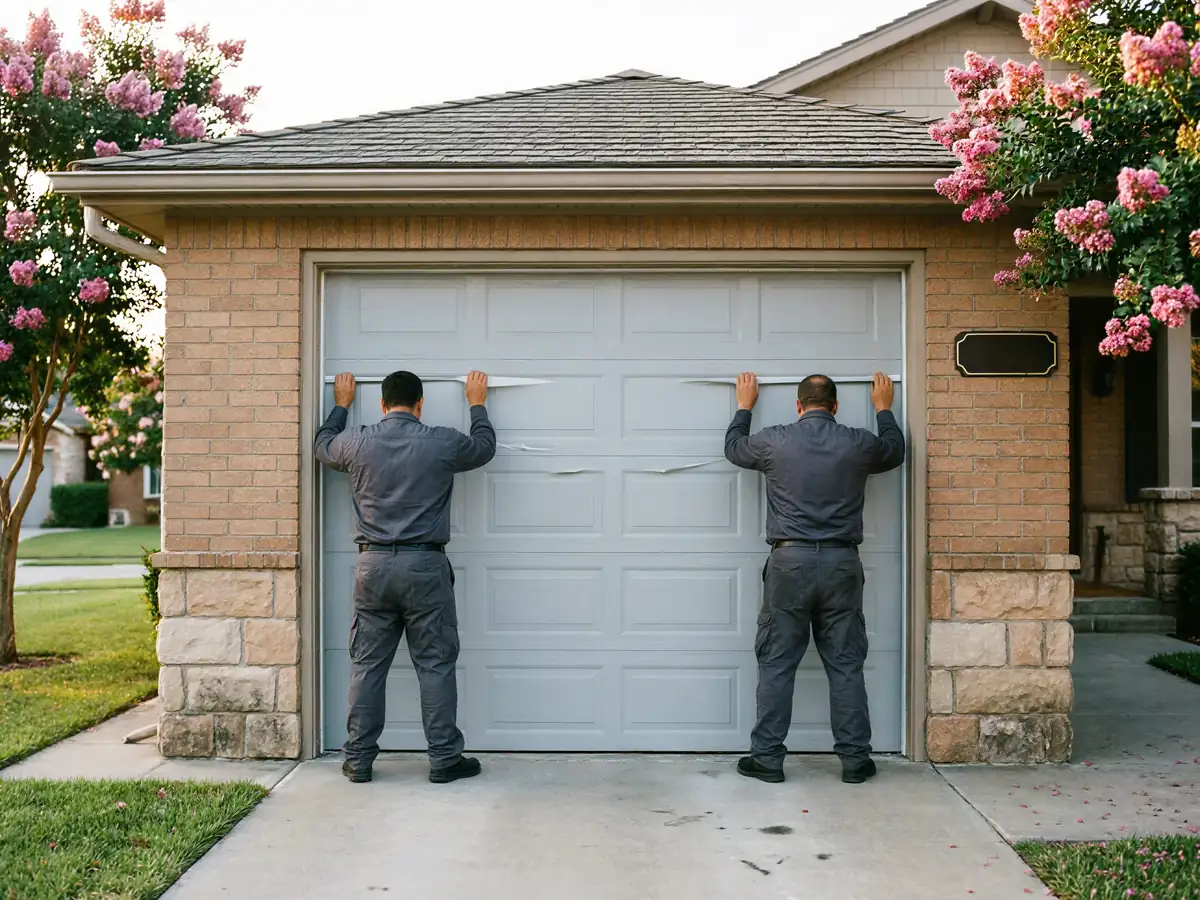
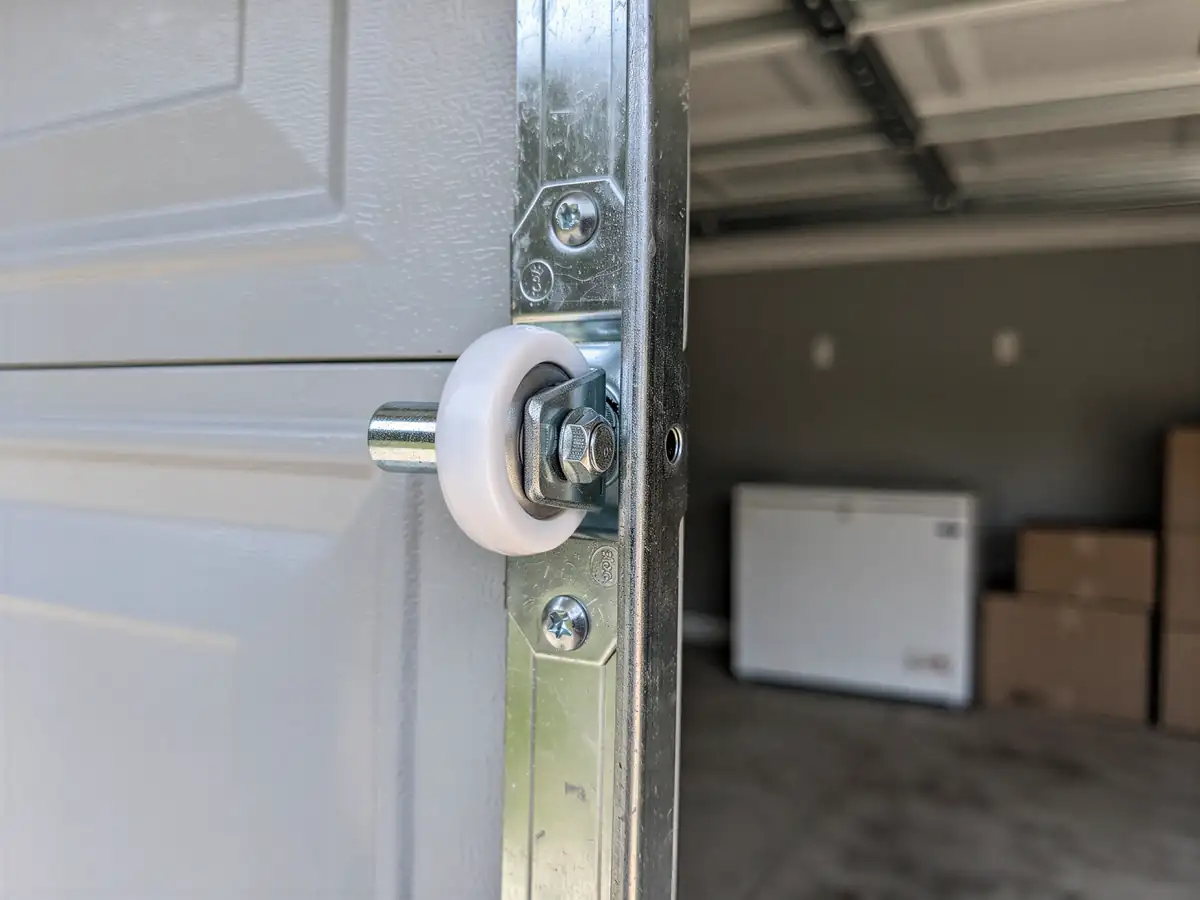
Torsion springs sized for older single and double doors, standard-lift cables, rollers, and the hinges and brackets that corrode first on a 60-year-old track system. What we don't carry on the truck is a matching replacement panel for a discontinued one-piece door - if a panel on an original 1950s or 60s door is cracked or caved in, we'll tell you straight that replacement is usually the better call than trying to source a match that doesn't exist anymore.
We travel from Enid for every Covington call, about 17 miles each way
So we load the truck based on what's common for houses of this age before we head out, rather than guessing once we're on site. That's not a guarantee we'll have every odd part a prior owner installed, but it covers the springs, cables, and openers that make up the bulk of the calls we get from this part of the service area.
- 17 miles
Getting It Booked In
Covington households run a median income around $74,500, noticeably higher than the roughly $63,869 median across the wider service area, and that tends to track with more owners choosing full opener replacement over patching an aging unit. Either way, since we're coming from Enid rather than working out of a depot in town, it helps to know roughly what's wrong before we load the truck - stuck open, stuck closed, loud grinding, a spring that's visibly snapped.
We don't keep a crew stationed in Covington, so there's no walk-in counter and no same-day guarantee we can promise here - every job is a dispatched trip from Enid. That's an honest limit, not a sales pitch, and it's the reason a clear description of the problem when you call saves everyone a second trip. Check our coverage page for Covington for what we cover in this area, and the main Enid service page for the full list of what the company handles.