Time on the Job
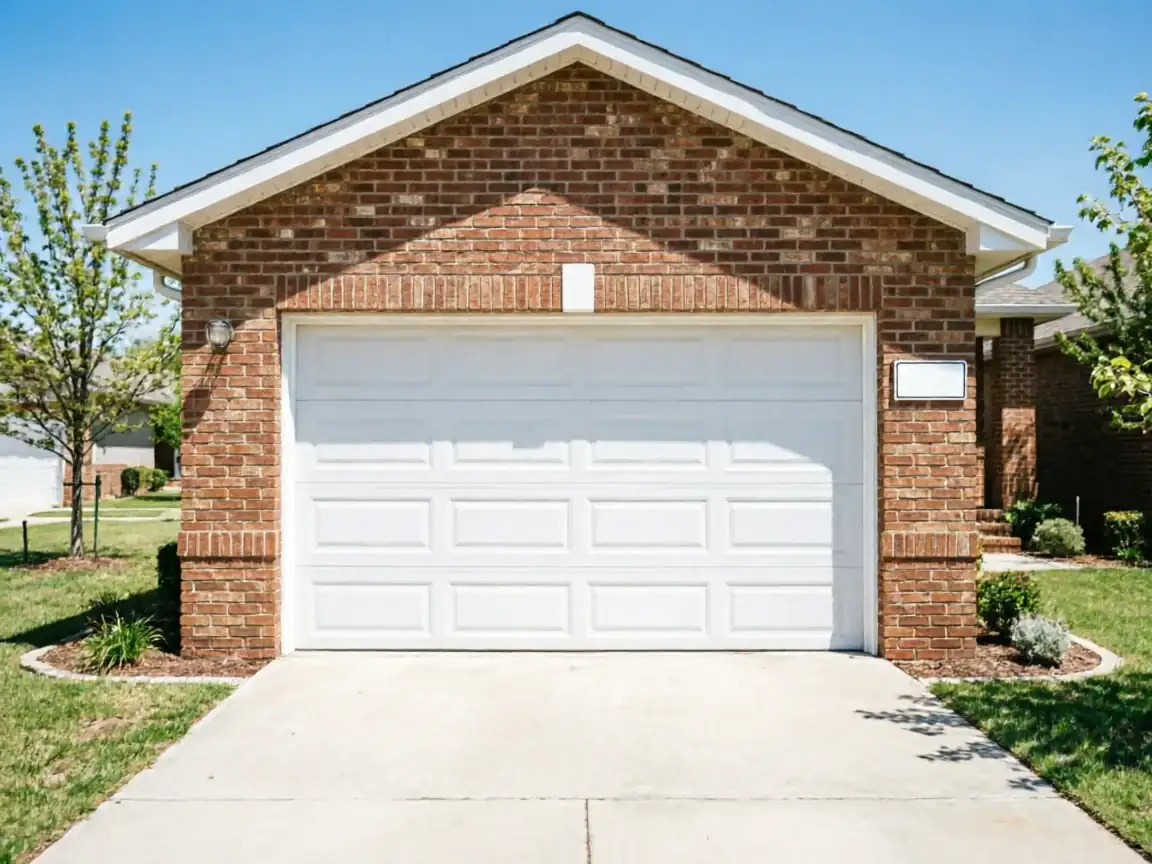
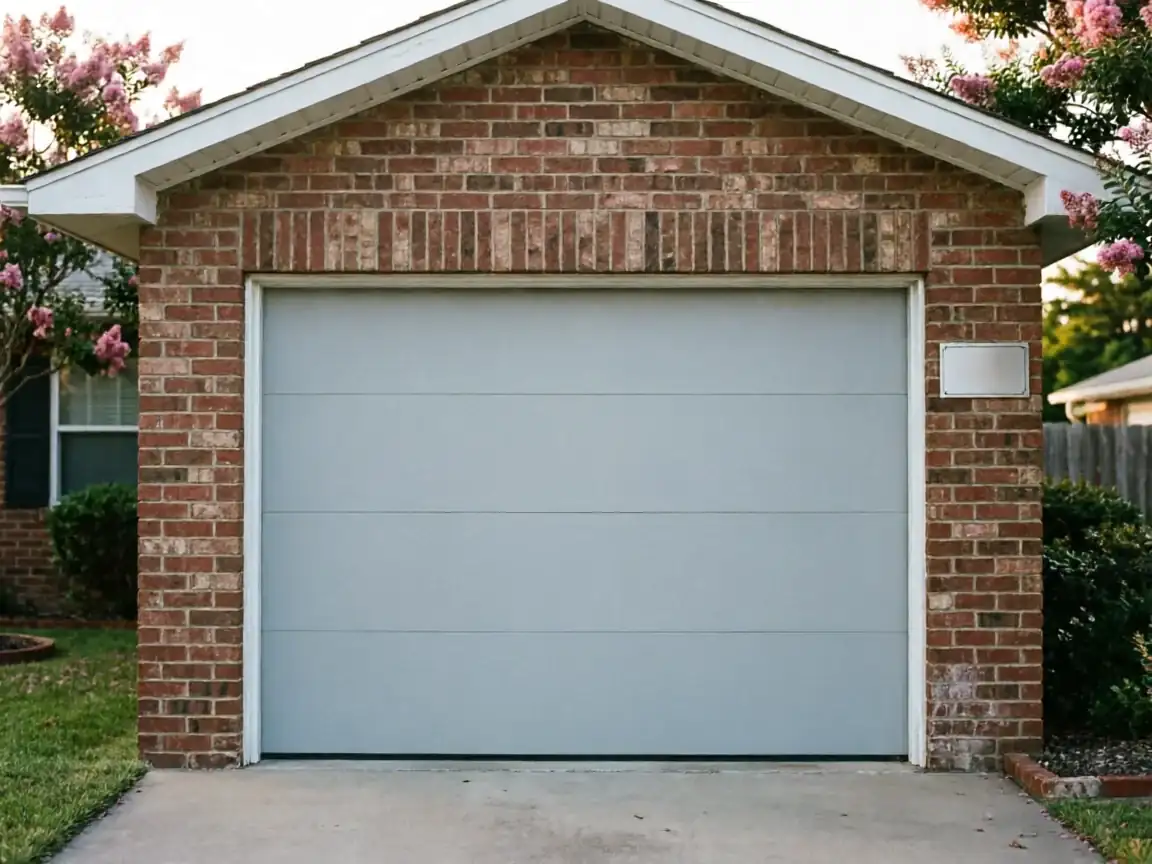
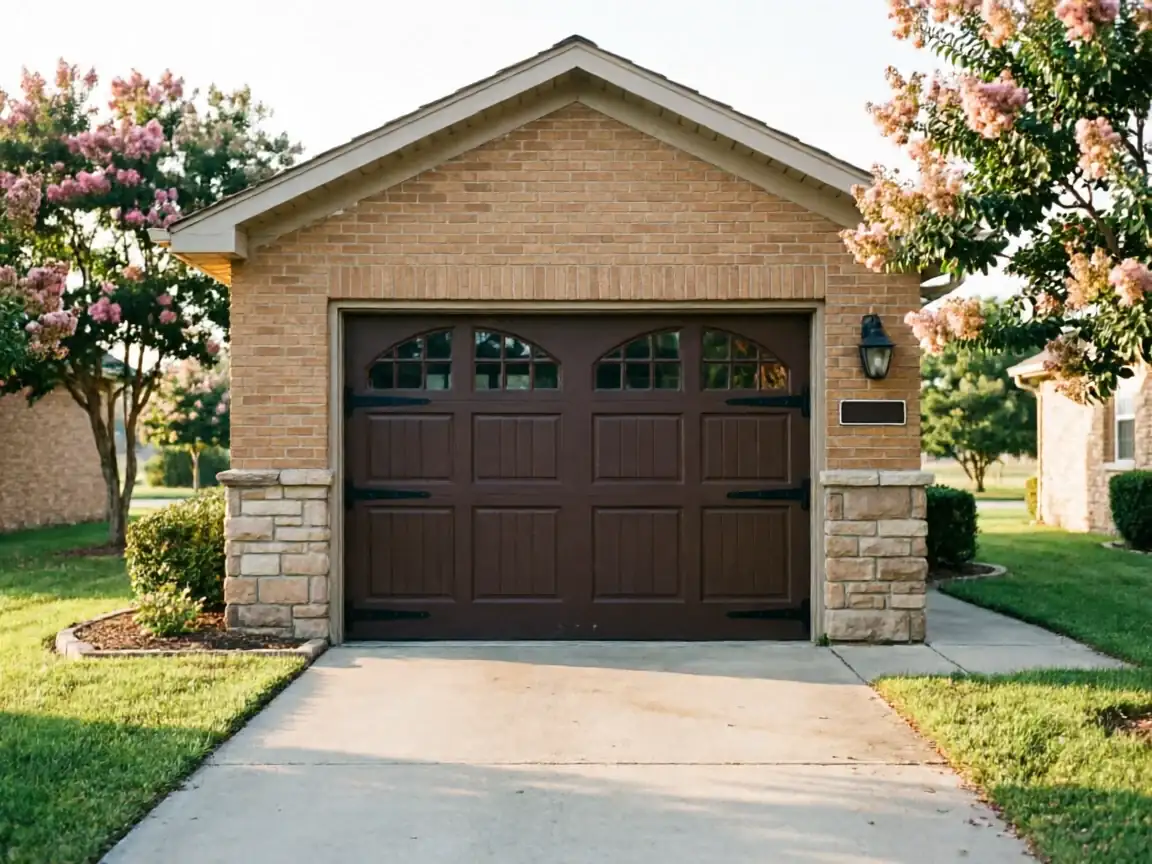
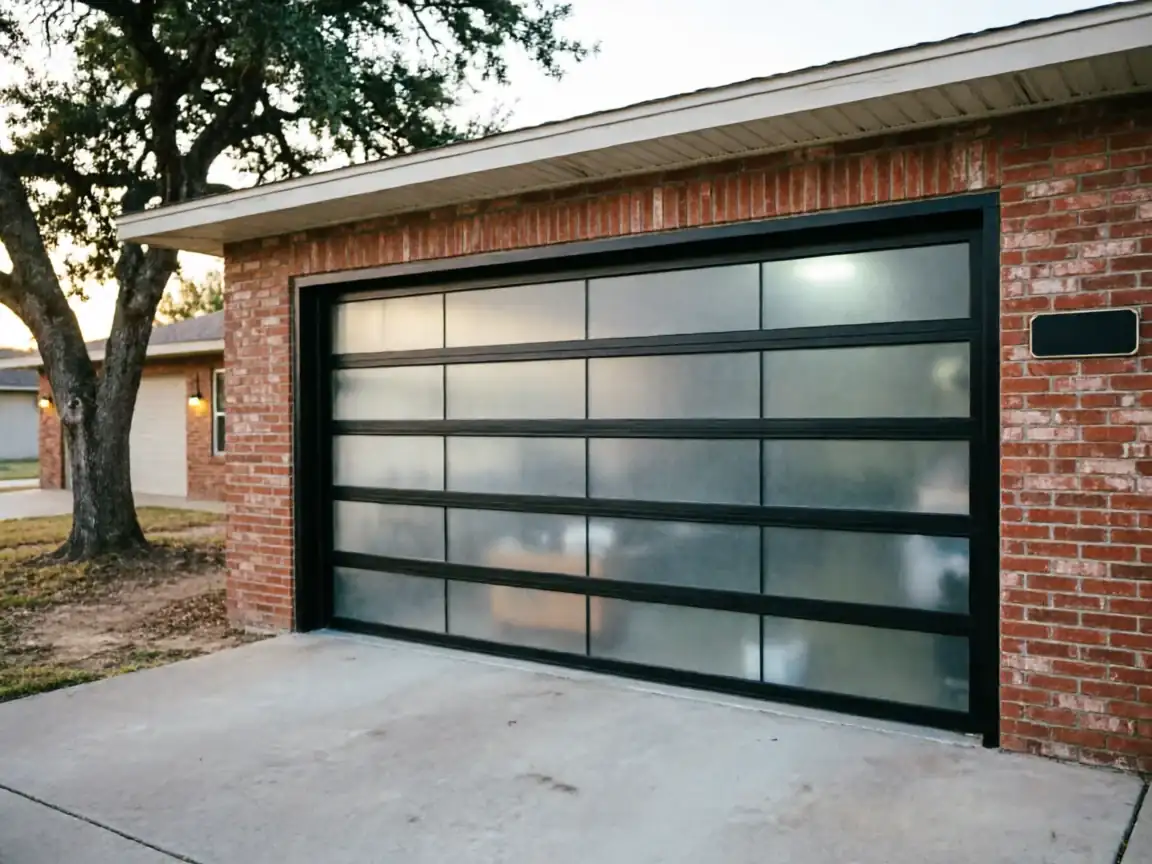
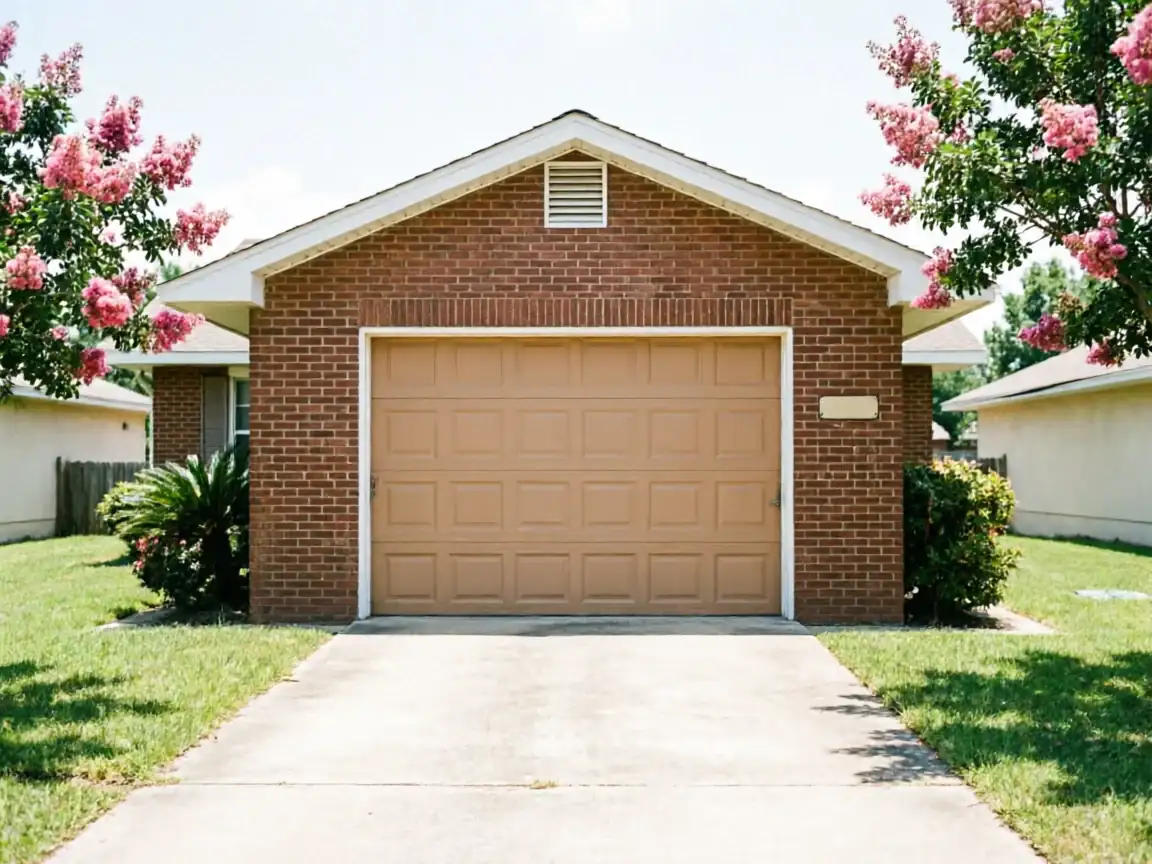
Most of the calls we get out of Kremlin aren't old one-piece doors with a crack down the middle - they're sectional steel doors from right around 1981, the tail end of the build-out that put up most of this part of the county. That's later than the 1956-1981 range that covers the wider Enid service area, so Kremlin's doors tend to be a shade newer than what we see elsewhere, with roll-formed steel panels instead of the flat wood or single-panel slabs you still find on older stock.
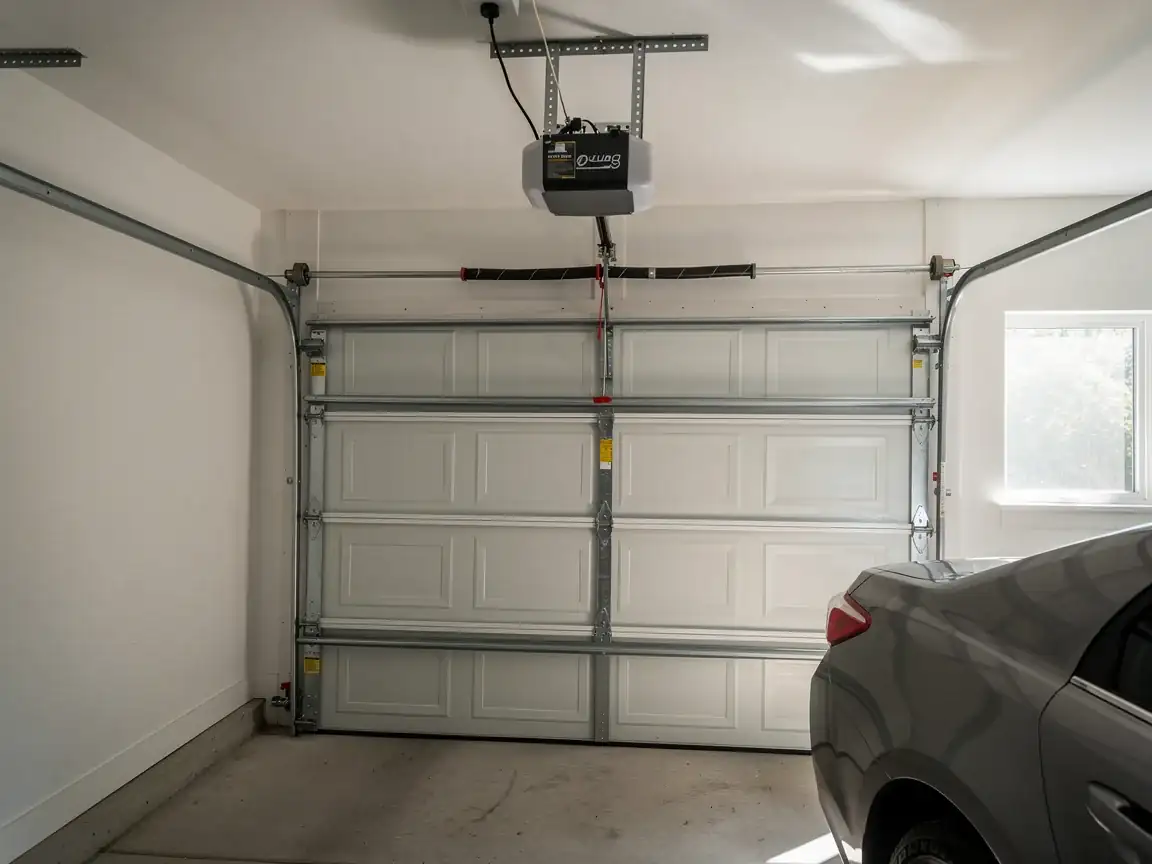
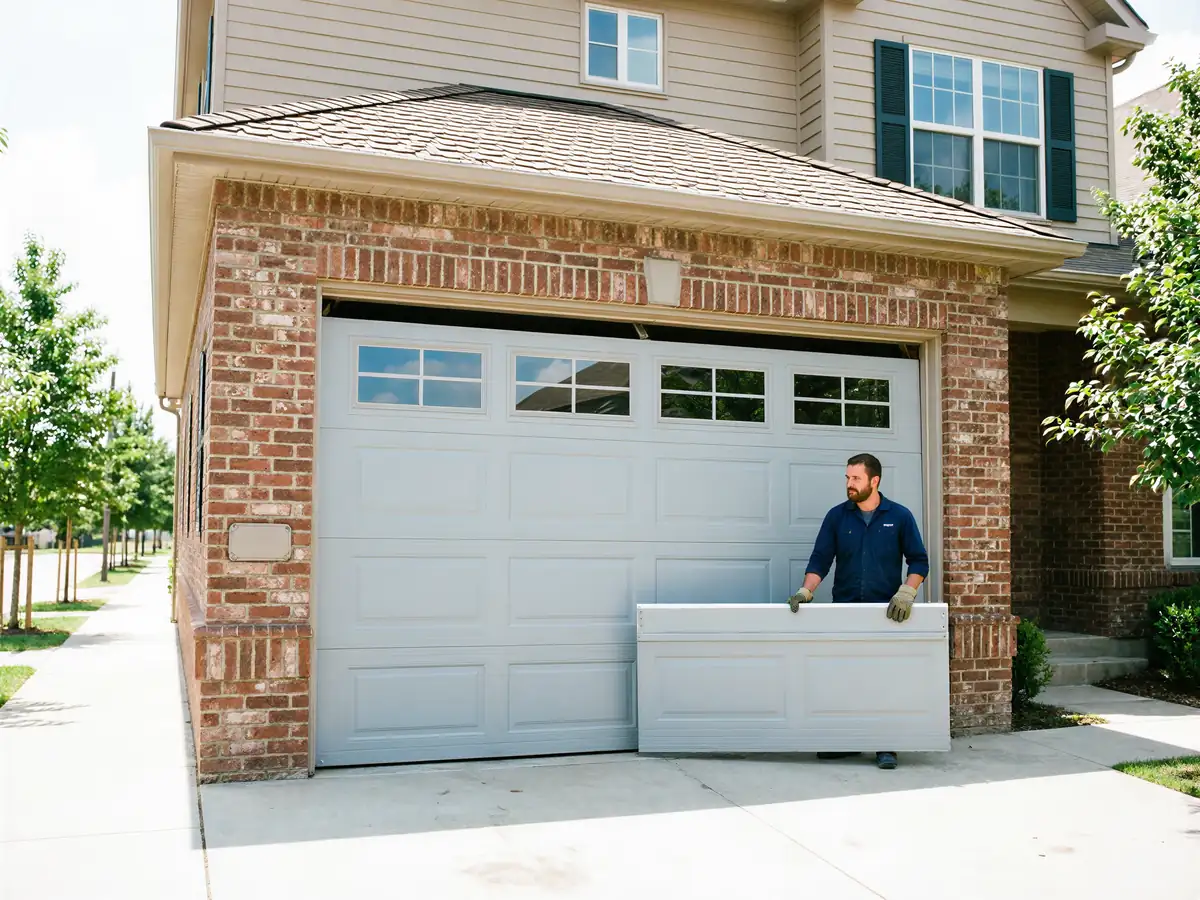
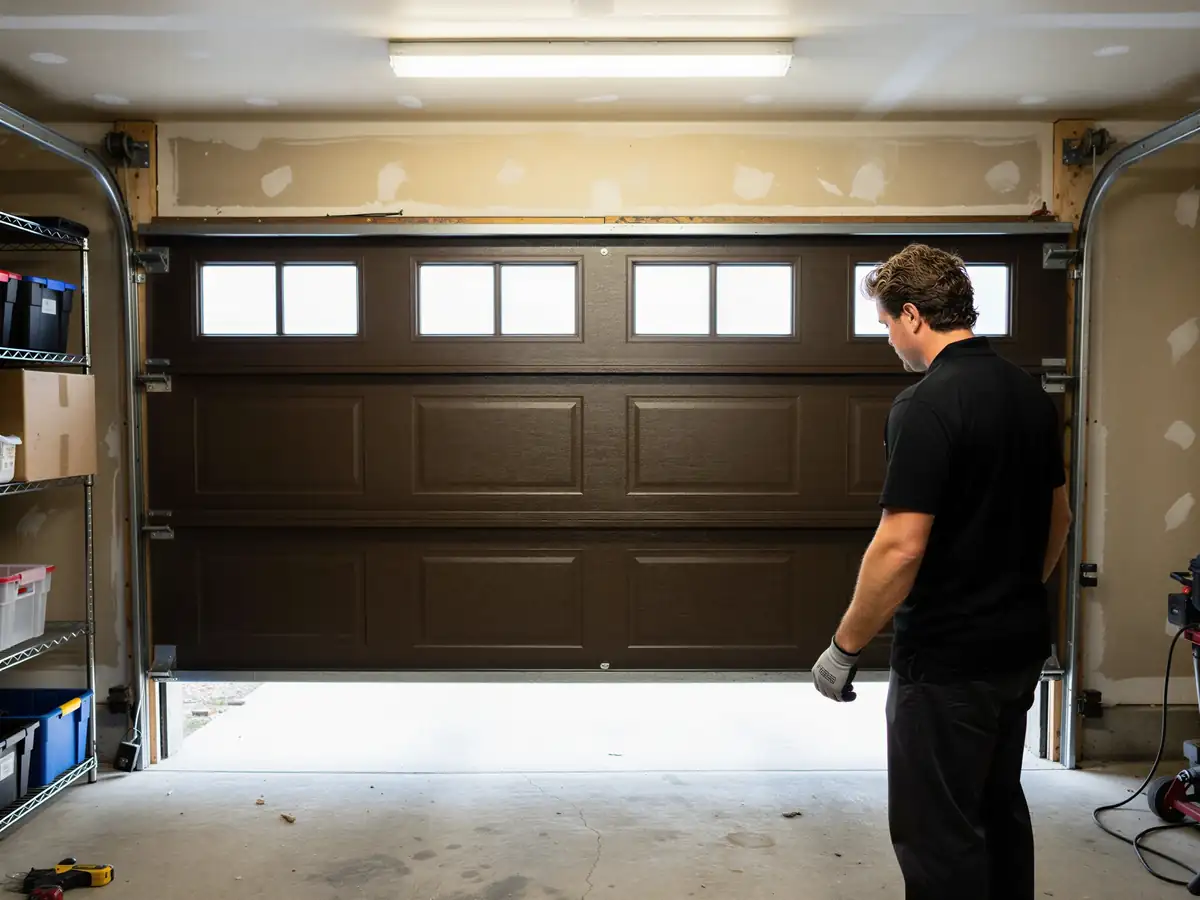
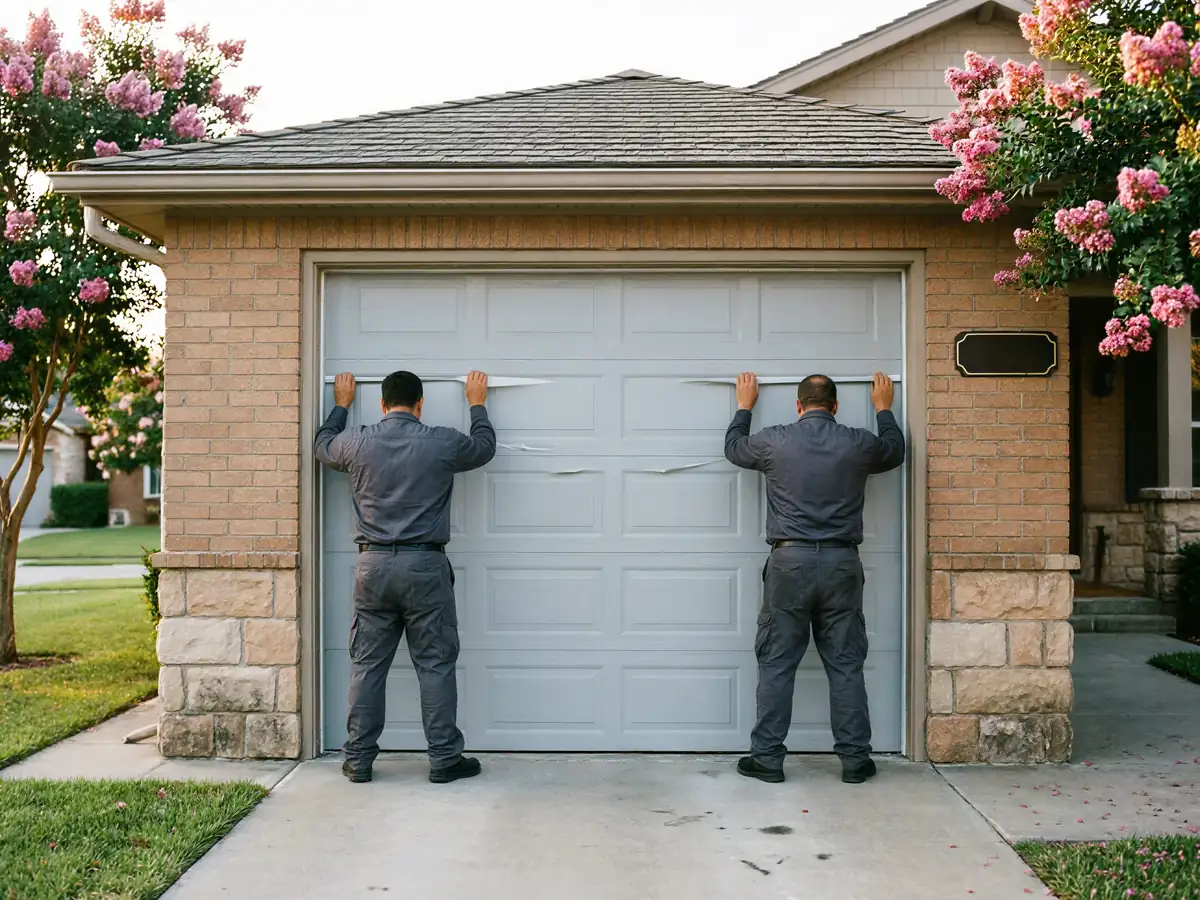
The fault shows up the same way almost every time: a dent or a buckled seam on the bottom one or two sections, usually from a trailer hitch, a basketball, or just years of a kid's bike leaning against it. The rest of the door - torsion spring, track, opener - is usually fine. You don't need a new door. You need the two bad sections pulled and swapped, and the rest left alone.
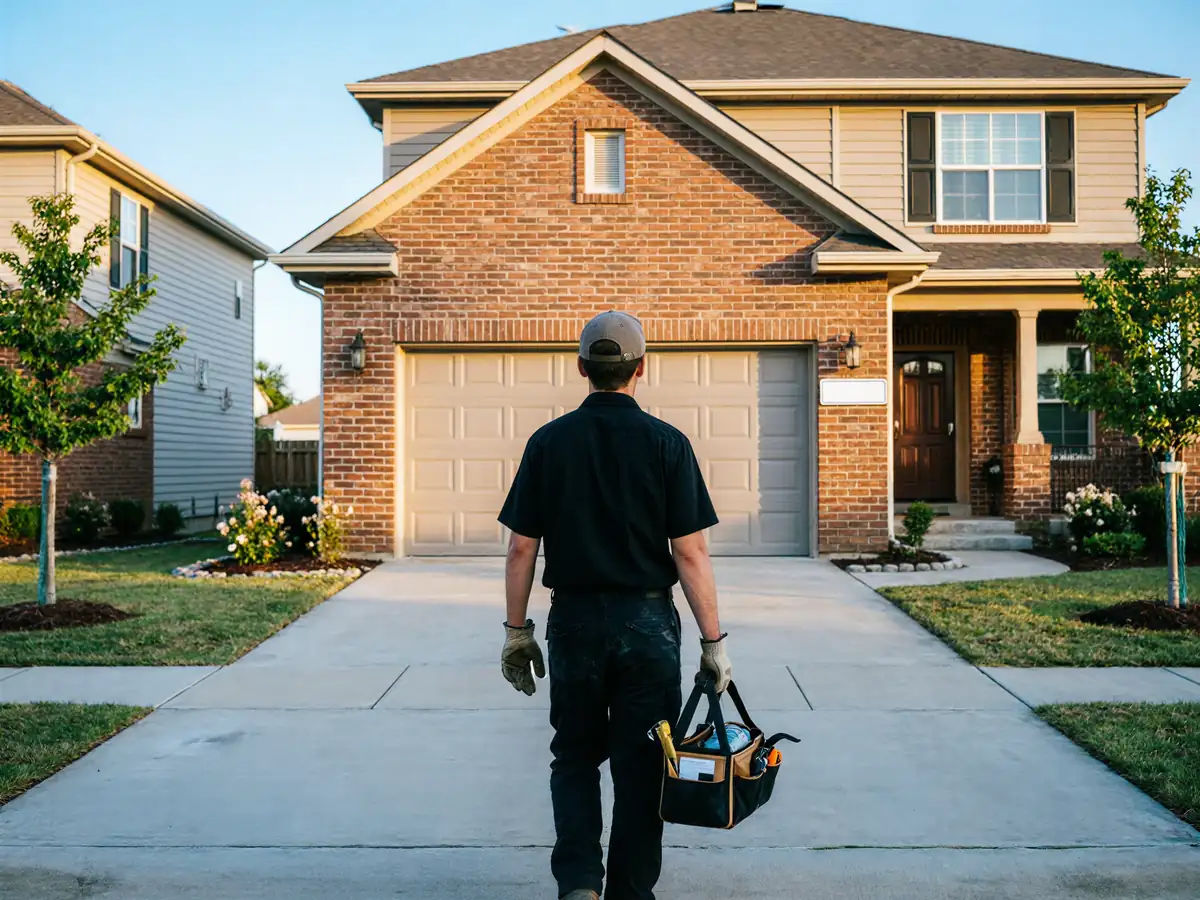
We drive the 10 miles out from Enid for these, and because it's a panel swap and not a full install, we're usually in and out in under two hours once we're on site with the right section in the truck.
What It Costs
Kremlin sits at a median household income of $86,094, noticeably higher than the $63,869 median across the wider Enid service area. That doesn't change what a panel costs, but it does change the math a homeowner runs: more people out here choose to replace the damaged sections rather than live with a dent, because the repair is cheap relative to the house.
Panel replacement is priced by the section, not the door. A single bottom panel on a standard double door costs less than a full-door tear-out and install, and it's the honest choice when the rest of the door - spring, track, rollers - is still sound. We're not going to sell you a new door when two sections and a few hours of labor solve it.
The one thing that moves the number is matching the panel. If your door is a common builder-grade profile from the early 80s, we can usually source a matching section. If it's an odd or discontinued width, we may need to order it, and that adds time, not necessarily cost - we'll tell you which one you're in before we quote anything.
Parts We Carry
Because so much of Kremlin's housing landed in that 1972-1981 window
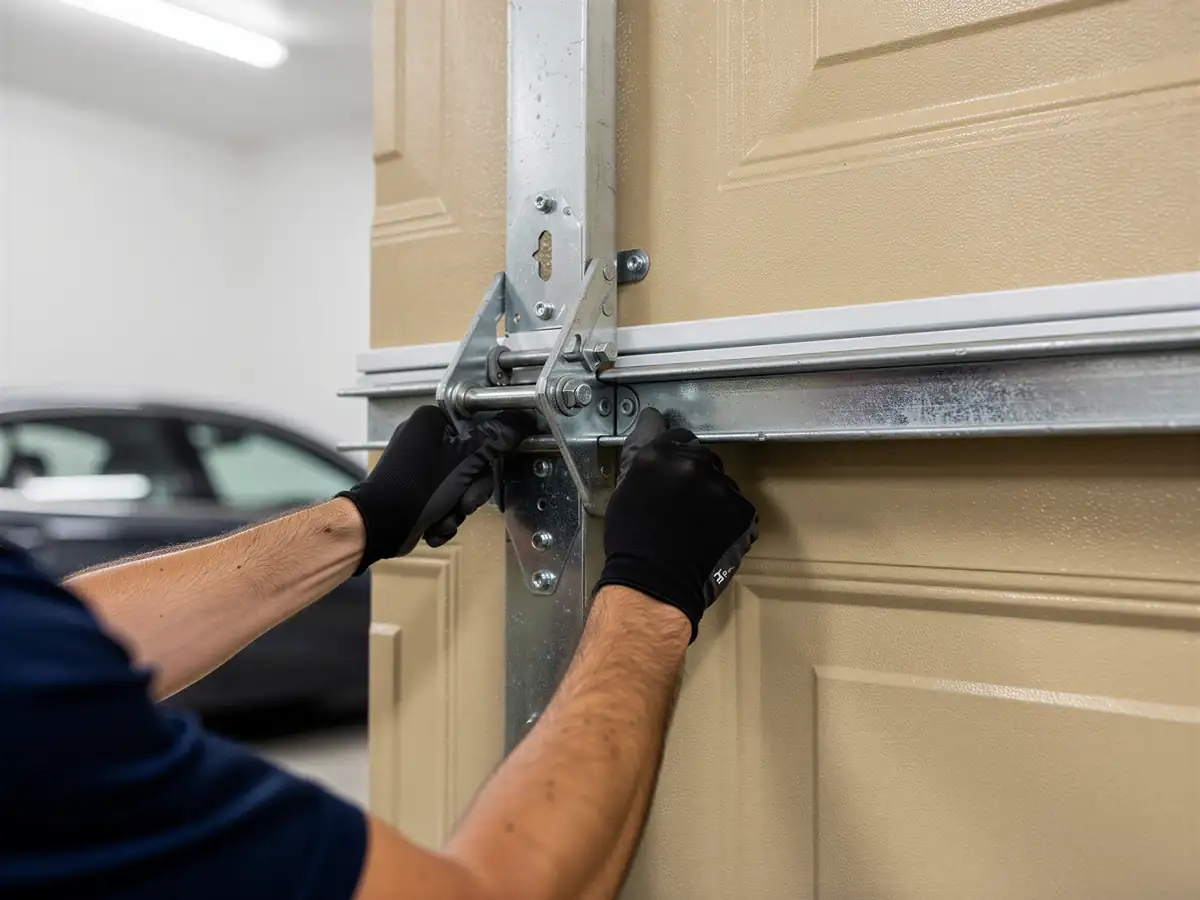
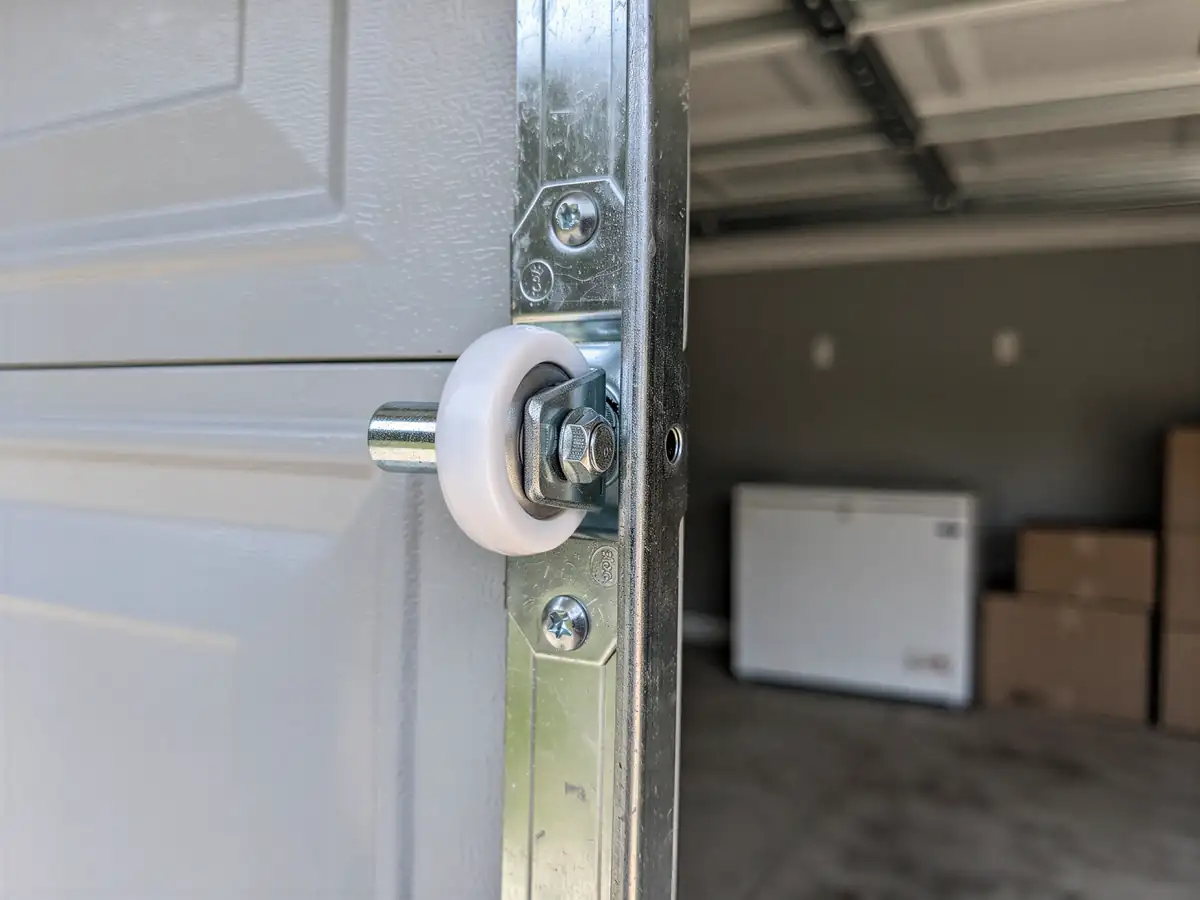
We keep a stock of panel sections sized for that era's standard door widths - the roll-formed steel profiles that went up on most garages out here rather than the older flush wood doors you'd find on a pre-1960s build. Rollers, hinges, and end stiles for that generation are in the truck too, since a dented panel often bends the hinge or stile it's bolted to.
What we don't carry on the truck is a custom color match for every builder run from that period
Steel sections from the early 80s came in a handful of standard colors, and if your door was repainted at some point, or it's a less common shade, the new section may not be an exact match until it weathers in. We'll tell you up front if that's the case rather than let you find out after we've driven back to Enid.
The Complications
Cold is the complication that catches people off guard. This part of Oklahoma sits in a moderate-cold climate band, and steel panels that took a hit in warm weather sometimes crack further, rather than just dent, when the same section flexes in a hard freeze. If a panel's already dented going into winter, that's a reason to get it swapped before the temperature drops, not after.
The other complication is fastener corrosion. Doors from the early 1980s are old enough now that the bolts holding sections and end stiles together have sometimes rusted into the steel, especially on the bottom panel where moisture sits longest. Pulling a rusted section without damaging the one next to it takes more time than the job itself, and it's the kind of thing that turns a two-hour call into a half-day one. We budget for it when we quote, but we won't know for certain until the panel's off.