What the Repair Takes
Pond Creek sits eighteen miles from our shop in Enid, and that drive is the first thing that shapes a job here. We don't keep a branch in town, so what rides on the truck when we leave Enid is what we've got to work with once we're on site. That means we load for the hardware this area actually runs, not a generic kit.
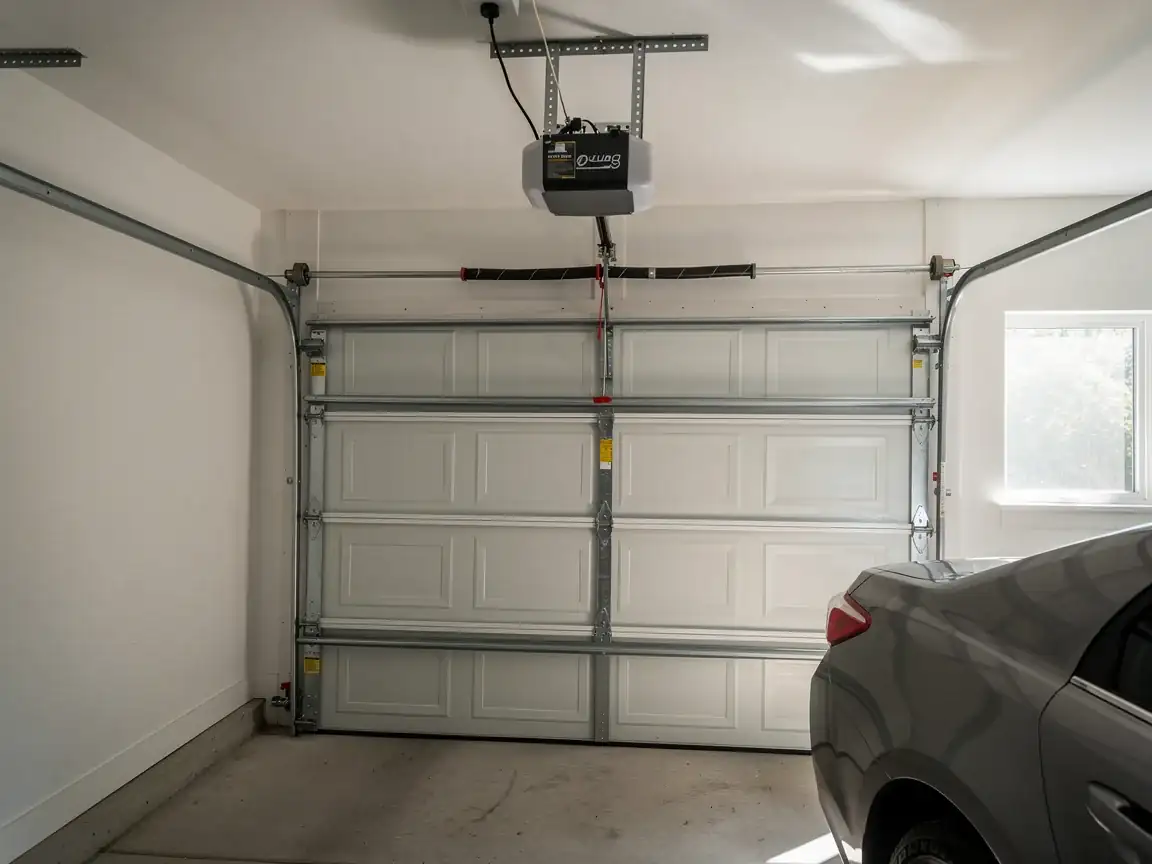
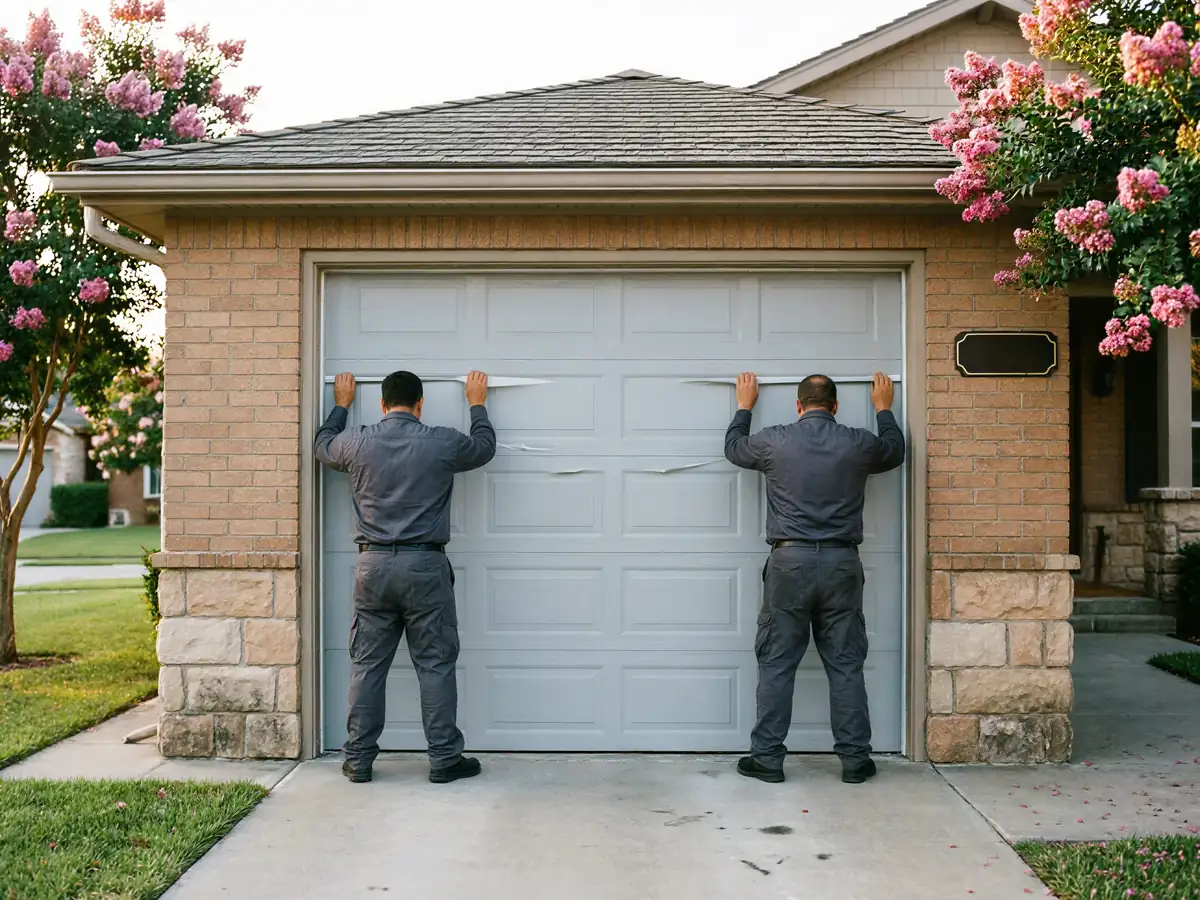
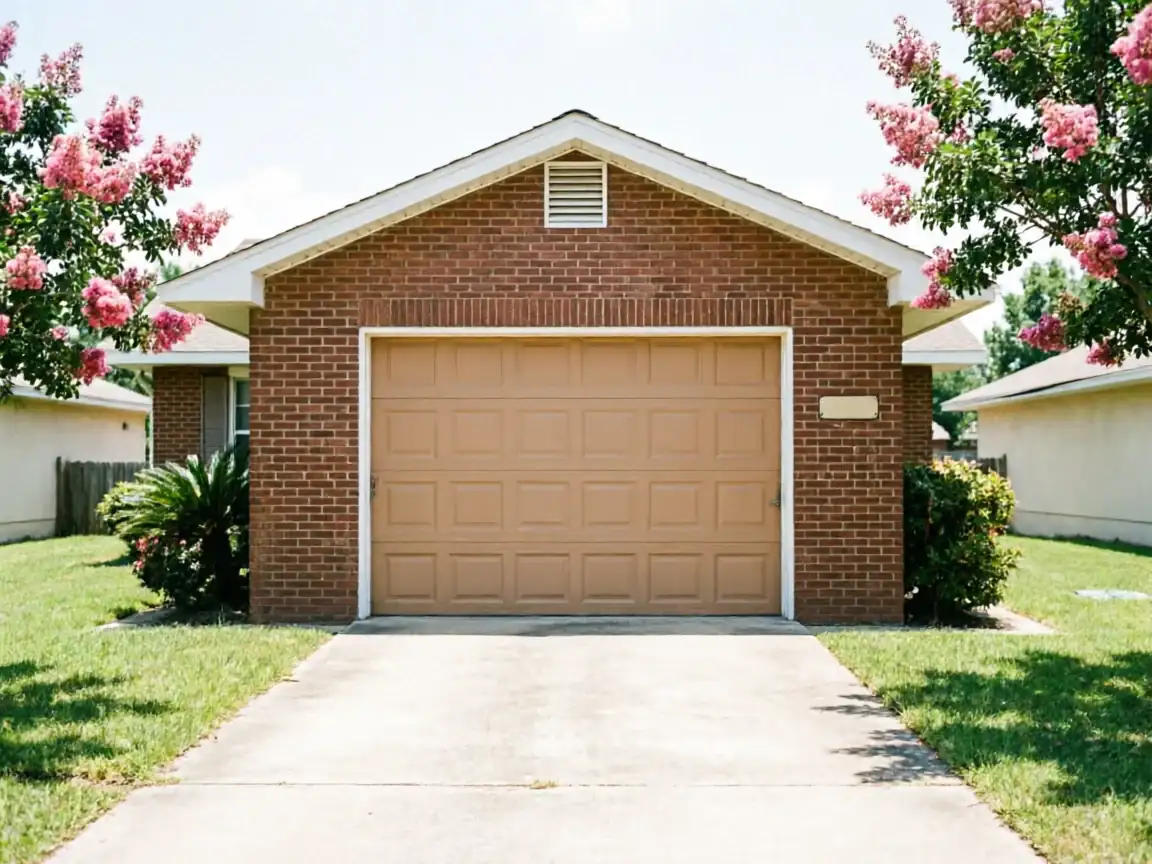
Around 304 households make up Pond Creek, and the houses are mostly from the same build window as the rest of this part of the county - early 1970s, median year 1972. That's a specific kind of door: steel panel sections on torsion springs sized for a lighter door than what gets installed new today, often with openers added later as an aftermarket job rather than built in. A repair here usually means working with what's original, not swapping in whatever's easiest to source.
We'll diagnose on arrival same as anywhere, but we come prepared knowing the odds favor older torsion hardware and a door that's heavier on its hinges than its spring count was ever sized to handle long-term.
Why This Fails Locally
A door built around 1972 has had fifty-plus years of open-close cycles by now, and in this part of Oklahoma that means fifty winters of hard cold snaps working against a spring that was never rated for that kind of lifespan to begin with. The cold band here isn't mild - it's the kind that makes steel brittle and grease stiff, and a spring near the end of its cycle count is exactly the one that snaps on the coldest morning of the year, not a random afternoon in June.
Median household income in Pond Creek runs around $60,208, lower than the roughly $63,869 median across the wider area we cover out of Enid. That's not a comment on anybody's household - it's context for why a lot of doors here get patched instead of replaced for longer than they would somewhere with more slack in the budget. A worn roller gets ignored until it jumps the track. A spring that's started to sag gets left alone until it lets go.
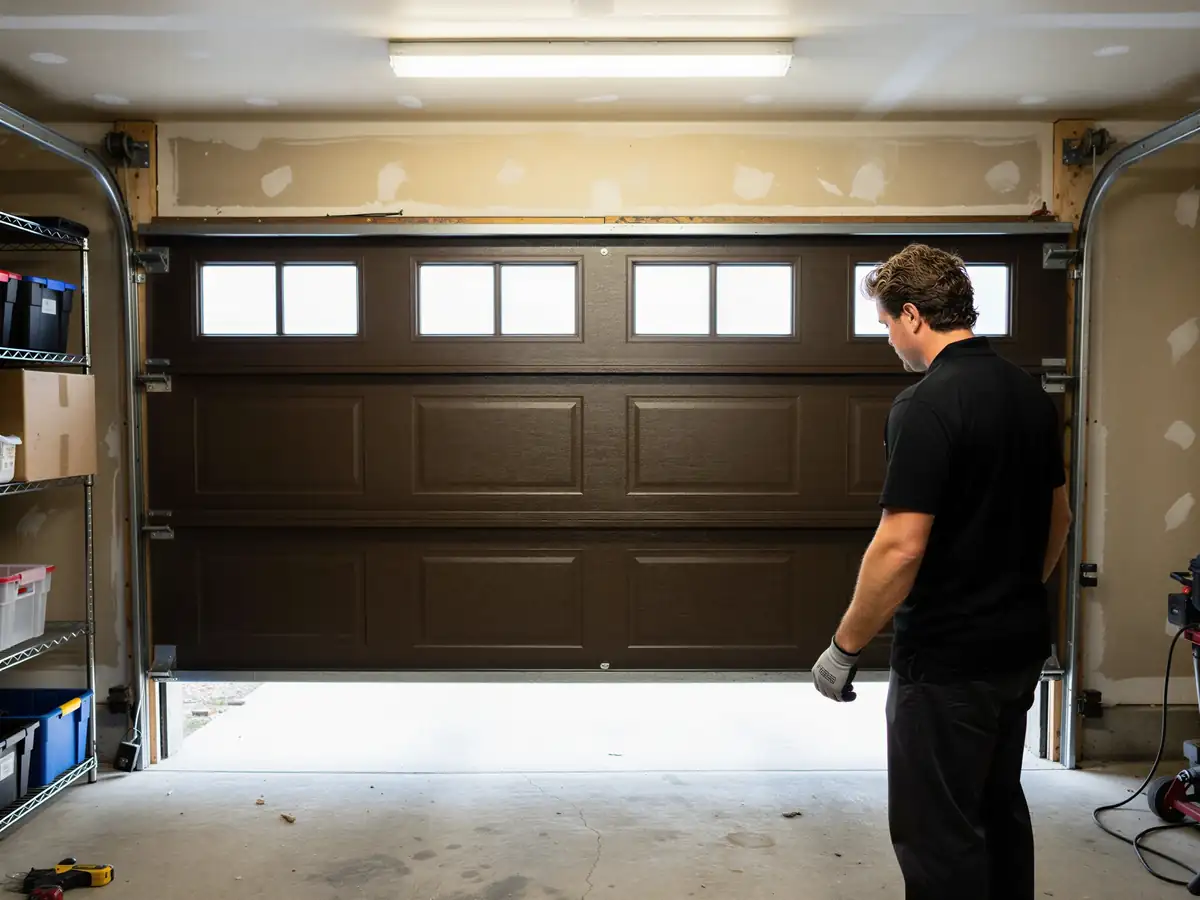
The honest limitation: if a door's track is bent from years of a sagging spring pulling it sideways, we're not always able to true it back - sometimes replacement is the straighter path than repair, and we'll tell you that instead of billing for a fix that won't hold.
Parts We Carry
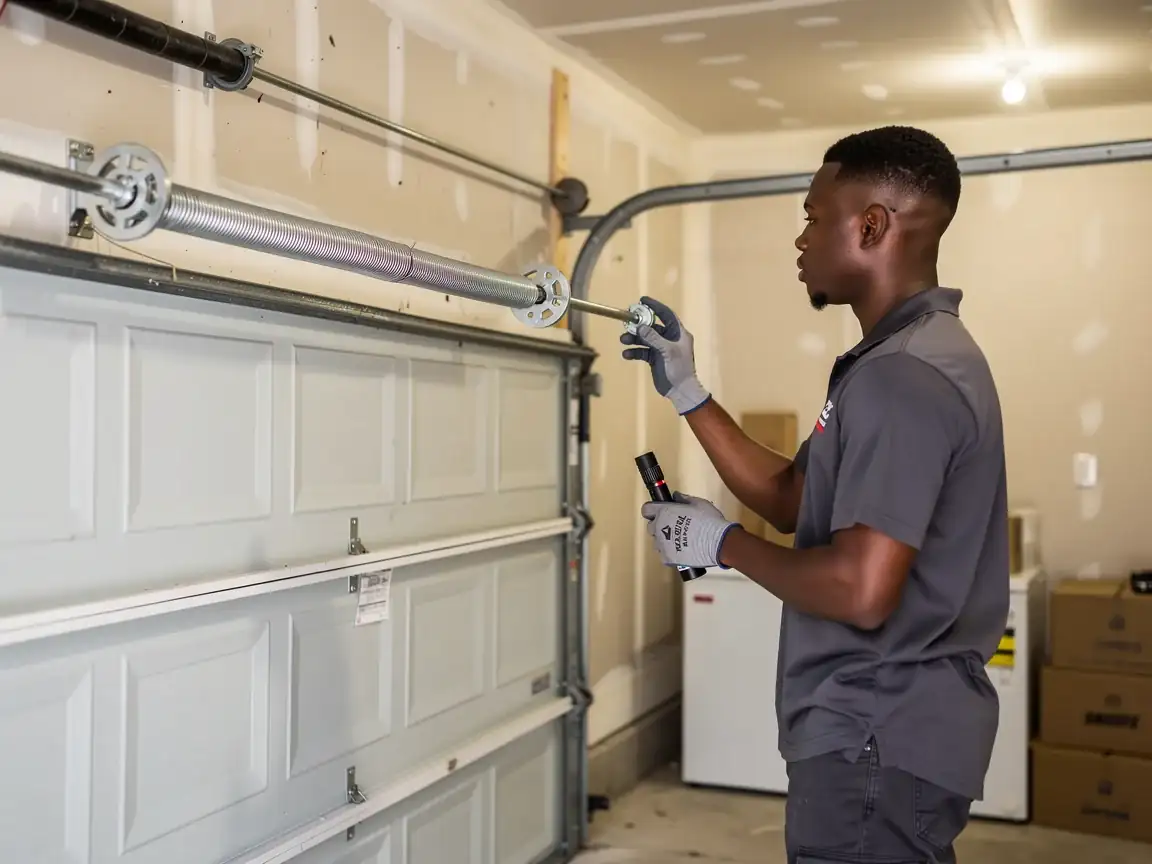
We stock torsion springs in the sizes that match 1960s-70s steel doors
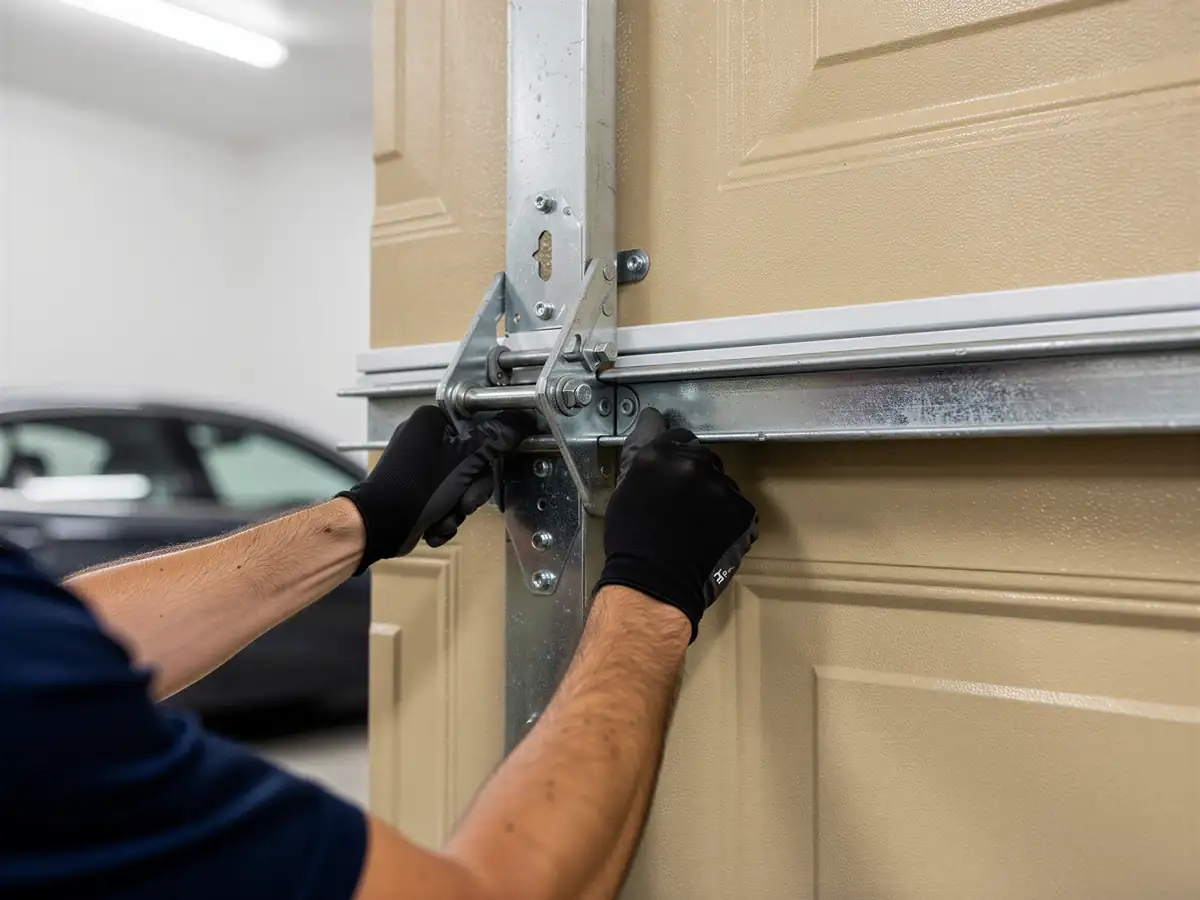
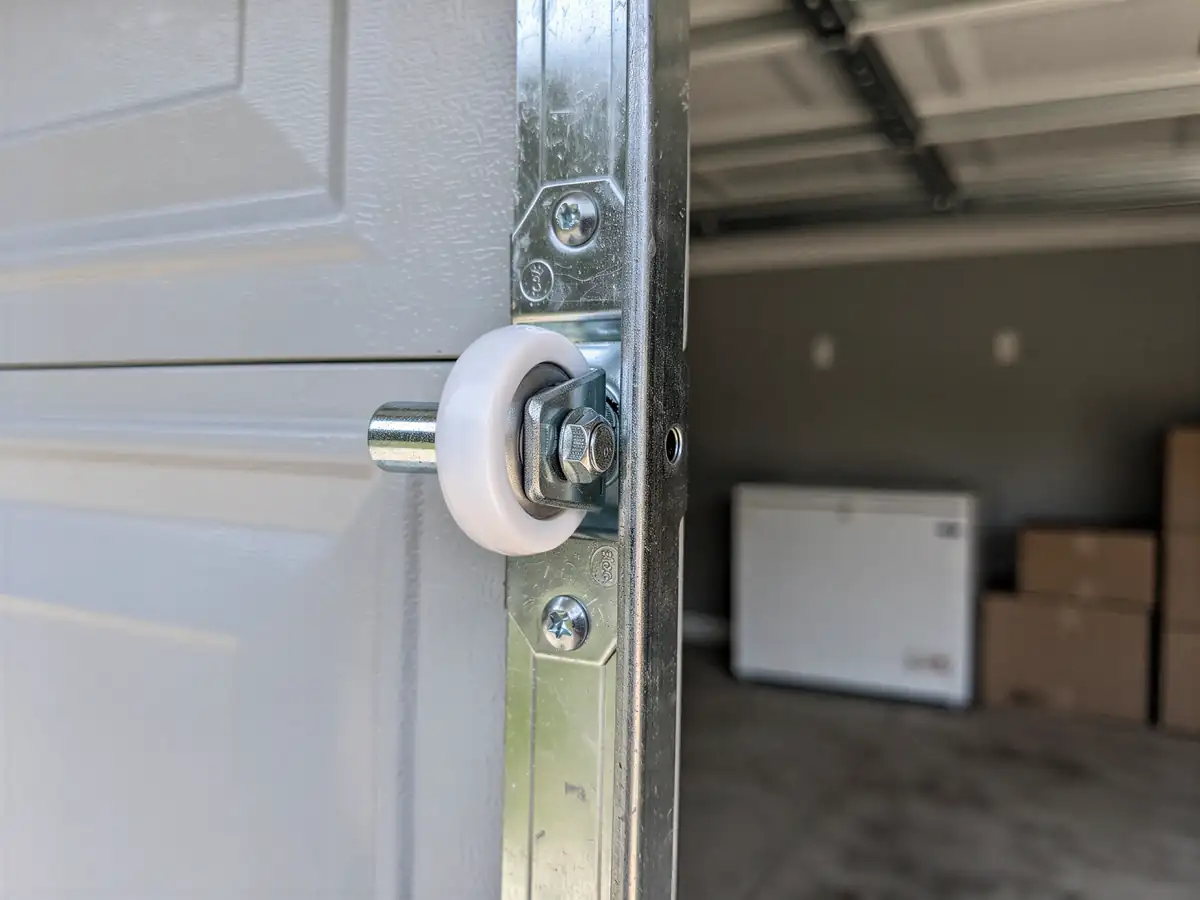
Which covers most of what's on the ground in Pond Creek given the median build year of 1972. That includes the lighter-gauge torsion bar hardware that was standard before heavier insulated doors became common, plus the galvanized rollers and drums sized to it.
We also carry cable and drum sets for side-mounted setups
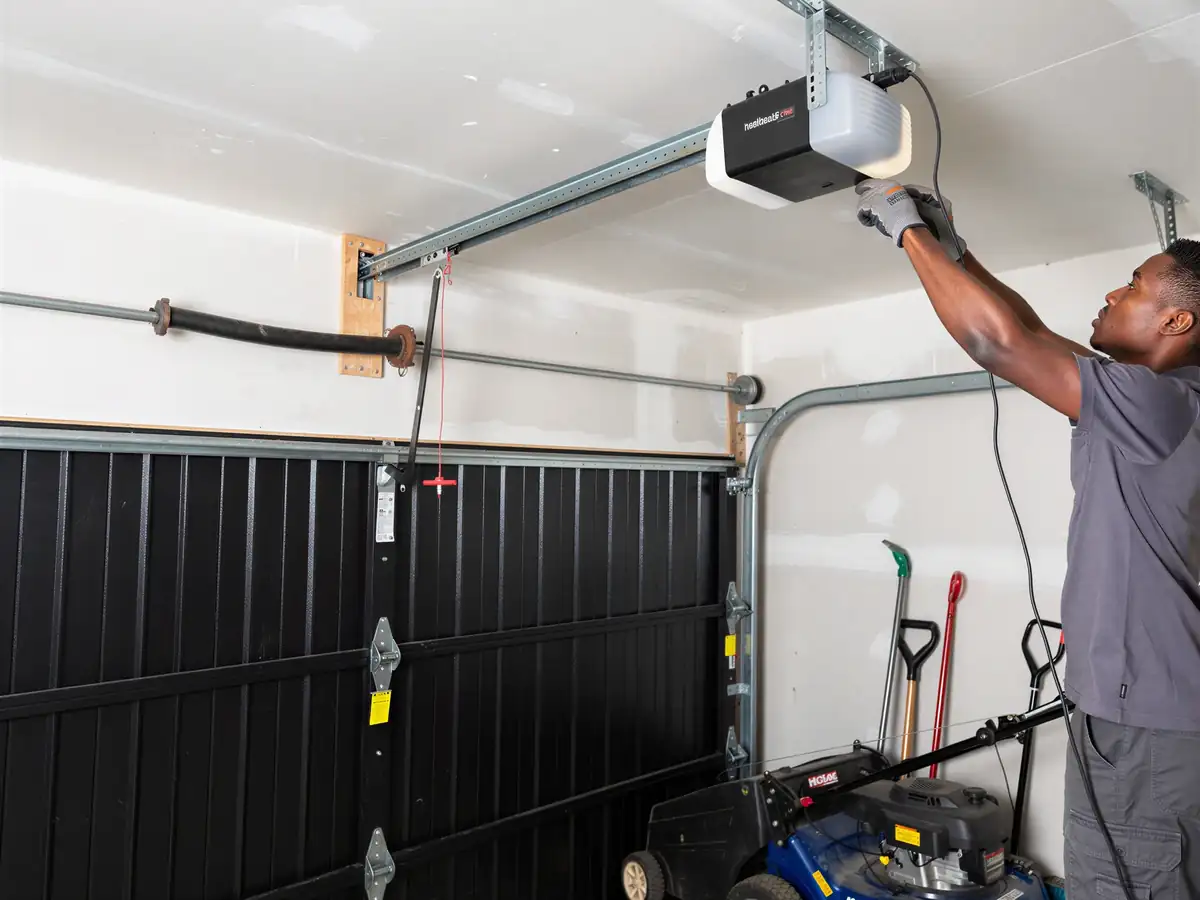
Since a lot of houses from this era were built with that configuration rather than the center-mount torsion systems you see in newer construction. Openers are a mixed bag - we carry common replacement units and the hardware to retrofit one onto an older door frame, since plenty of doors here had an opener added well after the door itself went up.
What we don't carry on the truck is anything specific to a custom or architectural door
Those aren't common in this housing stock, and if we run into one, we'll need to order the part rather than finish same-visit. That's rare here, but it happens, and we'd rather say so up front than promise a part we don't have in hand.
What It Costs
We don't quote a flat price for Pond Creek because the facts that drive cost - which spring size, whether the drums or cables need replacing too, whether the opener is original or already swapped - don't settle until we're looking at the door. What we can tell you is what factors into the number: the trip out, which runs about eighteen miles each way from our Enid shop, and the part itself, which for this era's torsion hardware is a known, stocked item rather than something we have to special-order.
Given the median household income here sits lower than the broader area we cover, we understand cost is often the real question behind the question. We'll give you the number before we start the work, not after, and we'll tell you plainly if a repair is close enough in price to a full door replacement that replacement is the better long-term call. We're not going to talk you into one over the other - we'll lay out what each buys you and let you decide.
Time on the Job
Because we're coming from Enid, eighteen miles out, the drive is part of the scheduling math for every Pond Creek call - we're not sitting around the corner, so we batch jobs in this direction when we can to keep the trip worth making for everyone involved. Once we're on site, the work itself on a typical torsion spring job for a door from this era doesn't take long; it's a known repair on known hardware, not a puzzle we're solving from scratch.
What can add time is discovering the track's been bent by a sagging spring, or finding cable that's frayed past the point a straight swap fixes it. On a door that's been running since the early 1970s, that's not unusual, and it's why we don't quote a tight window before we've had eyes on the door. We'd rather tell you a job might run long than rush it and have the door back in the shop in six months.